
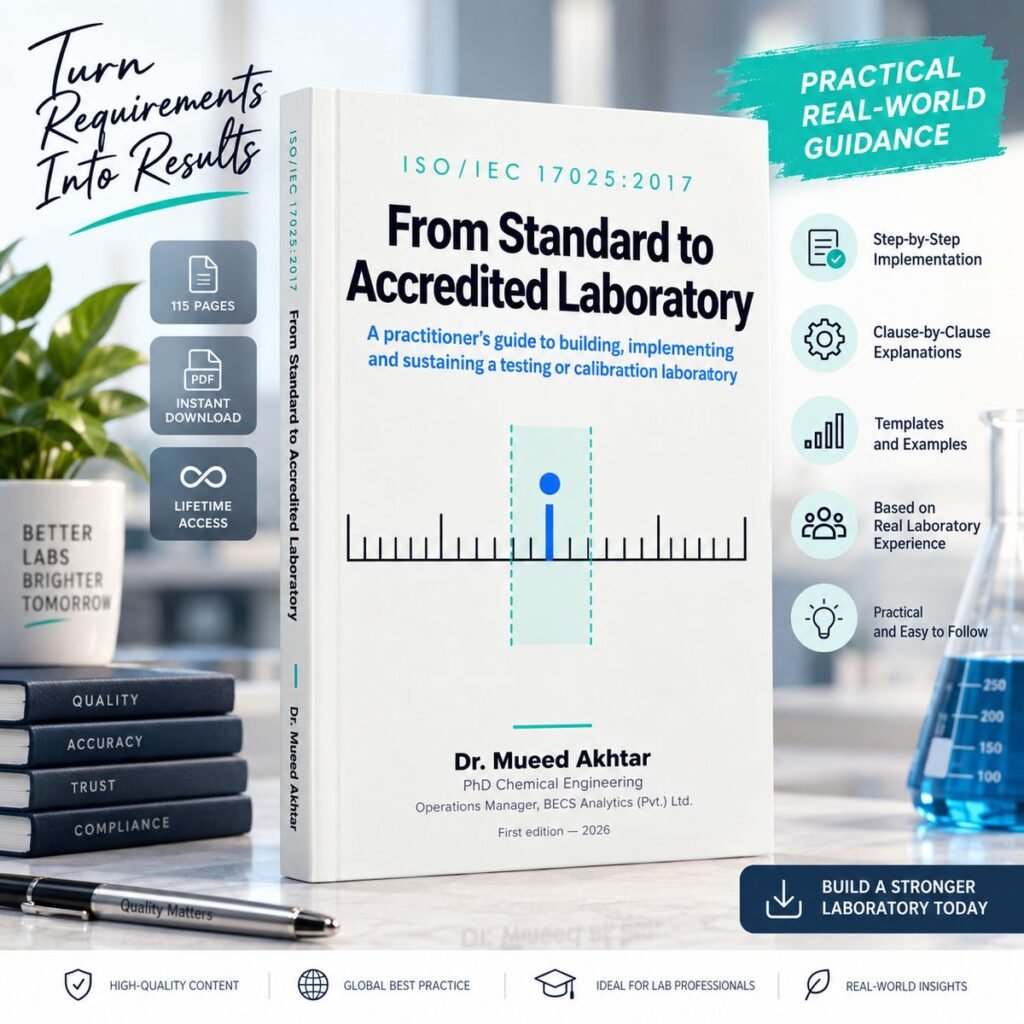
Quick answer: an ISO 17025 guide shows a testing or calibration laboratory how to meet ISO/IEC 17025:2017 and earn accreditation. The path is: run a gap analysis, define your scope, build a laboratory QMS (quality manual, procedures and records), prove technical competence through method validation, measurement uncertainty and traceability, run an internal audit and management review, then pass the accreditation body’s assessment.
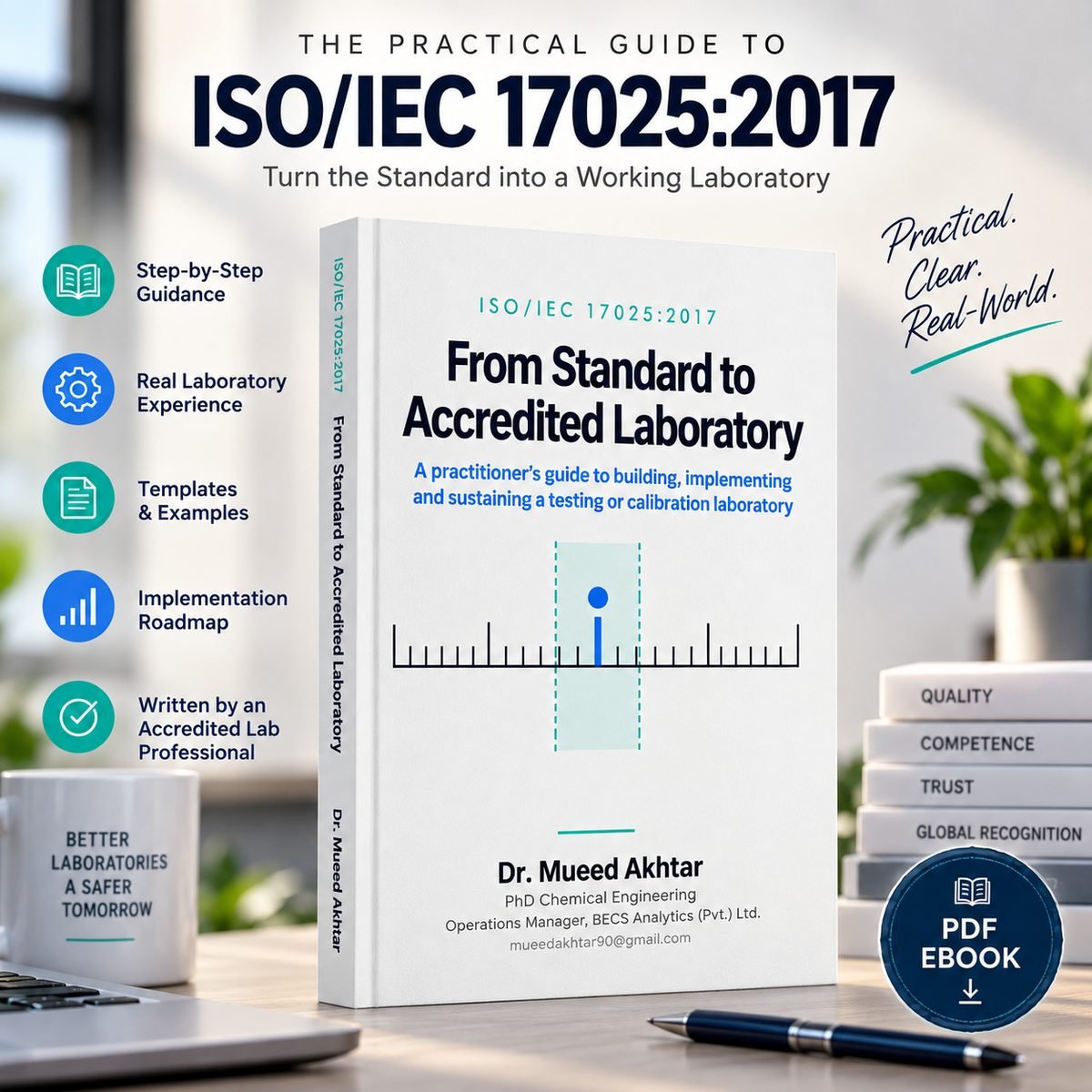
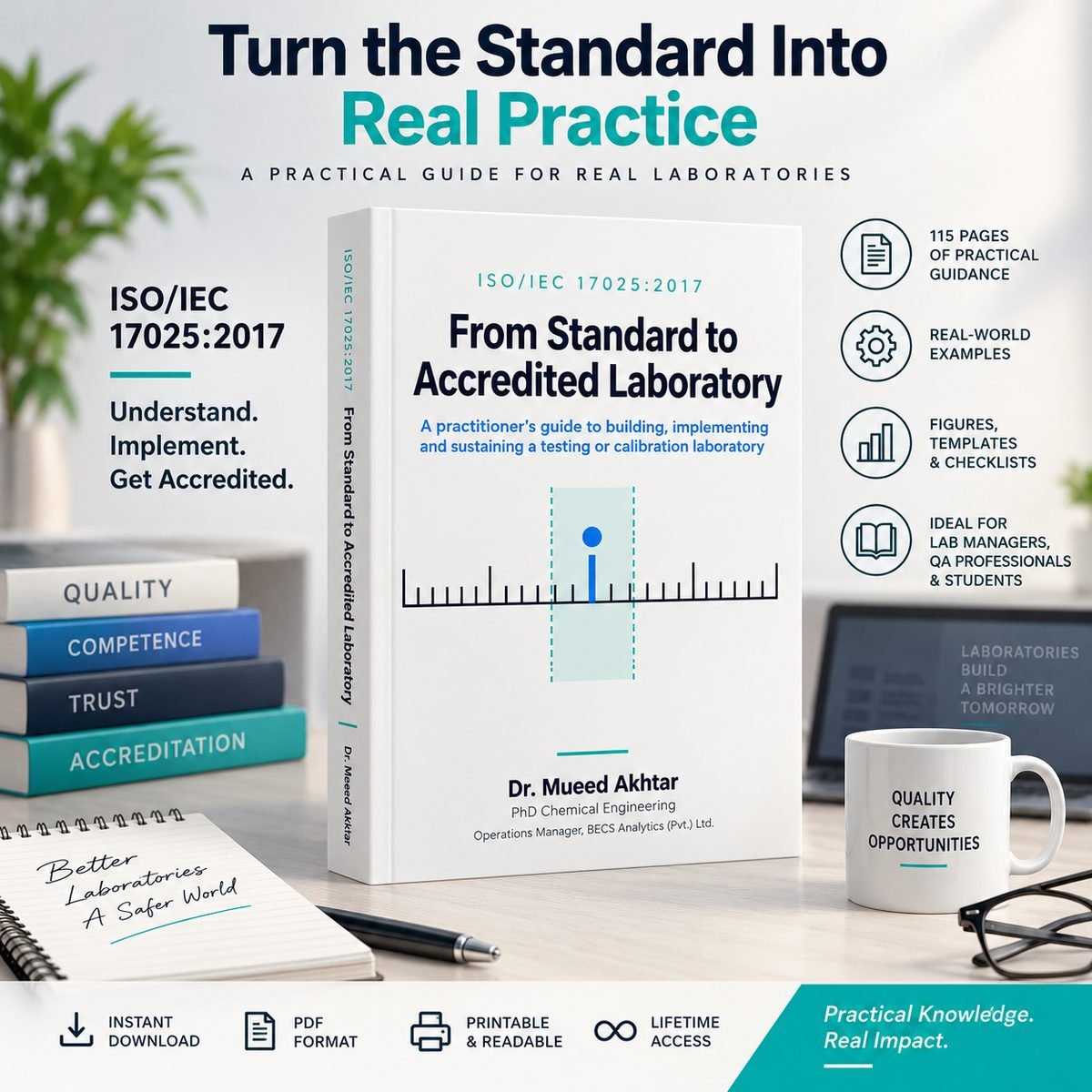
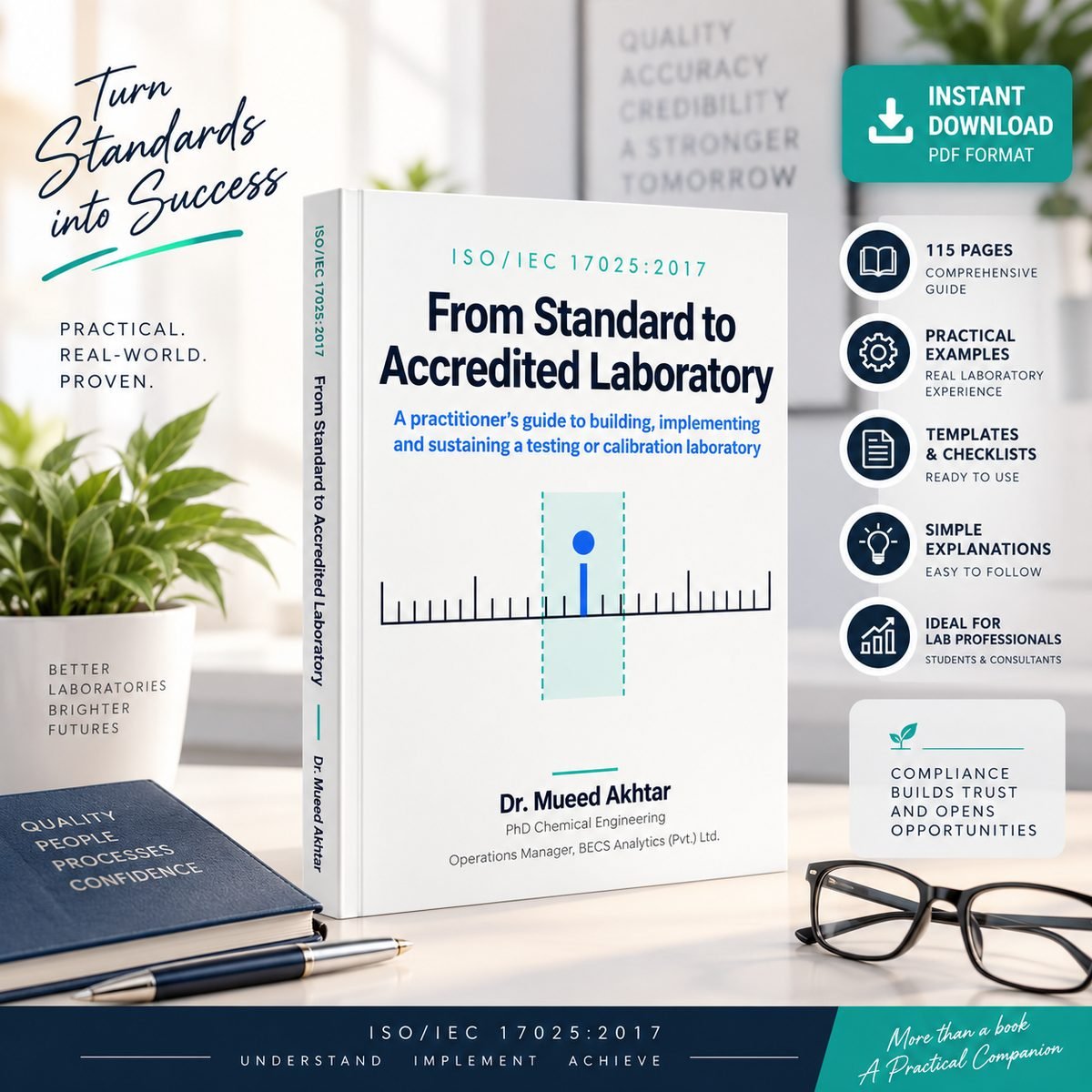
Turning a dense international standard into a working, accredited laboratory is where most teams get stuck. The clauses tell you what is required, not how to do it on a Monday morning with real samples, real instruments and real people. That gap is exactly why I wrote ISO/IEC 17025: From Standard to Accredited Laboratory, a 115-page practical ISO 17025 guide for lab managers, quality managers and QA/QC teams. You can get it as an instant-download PDF on Etsy or as a Kindle eBook on Amazon.
In this article
What is ISO/IEC 17025:2017?
ISO/IEC 17025 is the international standard for the competence of testing and calibration laboratories. It is published jointly by ISO and IEC, and the 2017 edition (released in November 2017) replaced the 2005 version. It applies to any organisation that performs testing, sampling or calibration, whatever its size or sector: food and feed, water and wastewater, environmental, pharmaceutical, construction materials, fertilizer, forensic or metrology laboratories.
Meeting ISO 17025 is proven through lab accreditation by a national accreditation body. Because accreditation bodies that sign the ILAC Mutual Recognition Arrangement recognise each other, an accredited result produced in Lahore can be accepted in London or Houston. You can read the official standard page on ISO.org, and if you want a lighter introduction first, see our plain-English guide to ISO/IEC 17025.
How the standard is structured (clauses 4 to 8)
Clauses 1 to 3 cover scope, normative references and definitions. The requirements you will be assessed against sit in clauses 4 to 8:
| Clause | Topic | What assessors look for |
|---|---|---|
| 4 | General requirements | Impartiality risks identified and managed; confidentiality of client information |
| 5 | Structural requirements | Legal entity, defined scope of laboratory activities, roles, responsibilities and authorities |
| 6 | Resource requirements | Personnel competence, facilities and environmental conditions, equipment, metrological traceability, externally provided products and services |
| 7 | Process requirements | Contract review, method selection, verification and validation, sampling, handling of items, technical records, measurement uncertainty, validity of results, reporting, complaints, nonconforming work, data control |
| 8 | Management system requirements | Option A or B, document and record control, risks and opportunities, improvement, corrective action, internal audits, management review |
The 2017 edition is more process-based and less prescriptive than the 2005 version. It introduced risk-based thinking, a stronger focus on impartiality, and explicit requirements for information management systems such as a LIMS.
A 10-step ISO 17025 accreditation roadmap
This is the same sequence the book walks through in detail, based on building a laboratory quality management system from scratch and taking it through accreditation.
- Secure commitment and buy the standard. Appoint a quality manager and a technical manager, and give them time and budget.
- Run a gap analysis. Compare current practice against every clause and turn the gaps into an action plan with owners and dates.
- Define your scope of accreditation. List the tests or calibrations, matrices, ranges and methods you want accredited. Start focused; you can extend the scope later.
- Build your management system documentation. Write the quality manual (or policy), procedures, forms and records. Decide between Option A and Option B if you already hold ISO 9001.
- Put impartiality and confidentiality in writing. Keep an impartiality risk register and have staff sign confidentiality and conflict-of-interest declarations.
- Get resources right. Define competence criteria, train and authorise staff, control environmental conditions, and calibrate equipment with metrological traceability to SI units.
- Validate or verify every method. Verify standard methods; fully validate in-house or modified methods. Estimate measurement uncertainty for each accredited parameter.
- Assure the validity of results. Run quality control charts, replicates, reference materials, and proficiency testing or interlaboratory comparisons.
- Run an internal audit and management review. Audit every clause, raise nonconformities, find root causes and close corrective actions before you apply.
- Apply, get assessed and stay accredited. Submit your application, host the document review and on-site assessment, close findings on time, then maintain the system through surveillance visits.
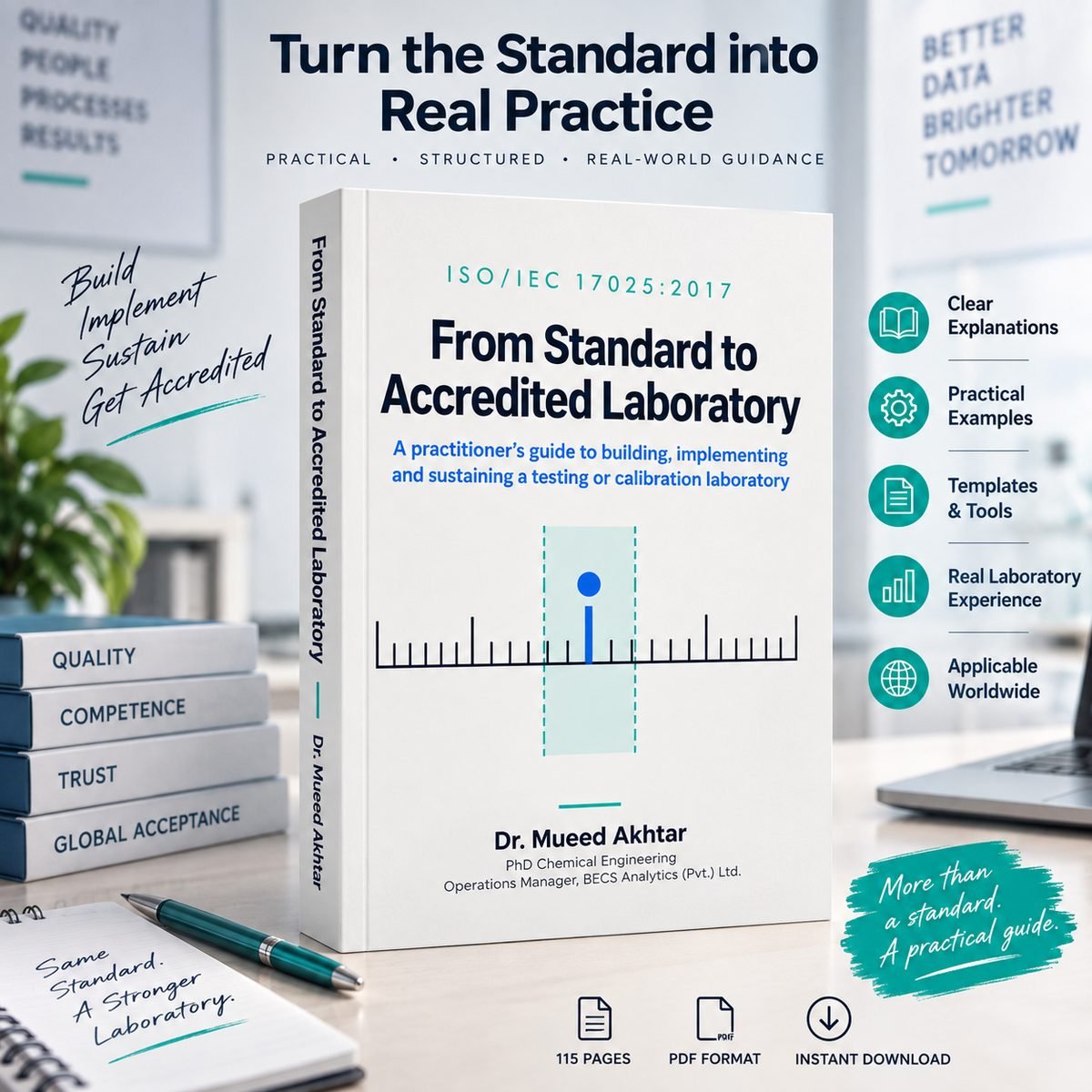
Want the full version of this roadmap with templates and examples at each step? It is inside the ISO 17025 guide PDF and the Kindle edition.
ISO 17025 vs ISO 9001: accreditation vs certification
One of the most common questions in any ISO 17025 guide is how it differs from ISO 9001. Both describe a management system, but they answer different questions. ISO 9001 asks, “Does this organisation manage quality consistently?” ISO 17025 asks, “Can this laboratory produce technically valid results?” That is why laboratories are accredited to ISO 17025 by an accreditation body, while organisations are certified to ISO 9001 by a certification body.
| Point | ISO/IEC 17025 | ISO 9001 |
|---|---|---|
| Applies to | Testing, sampling and calibration laboratories | Any organisation, any sector |
| Recognition | Accreditation by an ILAC MRA signatory body | Certification by a certification body |
| Focus | Technical competence and validity of results, plus the management system | Quality management system and customer satisfaction |
| Assessors | Lead assessor plus technical experts in your methods | Management system auditors |
| Key evidence | Method validation, measurement uncertainty, traceability, proficiency testing | Process control, objectives, customer feedback |
A laboratory can hold both. If your organisation already has ISO 9001, ISO 17025 clause 8 lets you choose Option B and rely on your existing ISO 9001 system for the management requirements, while you still meet every technical requirement in clauses 4 to 7.
Option A vs Option B explained
- Option A: the laboratory builds its management system directly on ISO 17025 clauses 8.2 to 8.9, covering documentation, document and record control, risks and opportunities, improvement, corrective action, internal audits and management review. Most stand-alone and first-time laboratories choose Option A.
- Option B: the laboratory already runs a management system that meets ISO 9001 and uses it to satisfy clause 8, provided the system supports and demonstrates consistent fulfilment of clauses 4 to 7. This suits laboratories inside certified manufacturing or service companies.
A realistic ISO 17025 accreditation timeline
Every laboratory is different, but most ISO 17025 accreditation projects move through the same phases. The ranges below are typical for a small to medium testing laboratory with a focused scope; larger scopes, many in-house methods or limited staff time will take longer.
| Phase | Typical duration | Main outputs |
|---|---|---|
| Gap analysis and planning | 2 to 4 weeks | Gap report, scope draft, action plan with owners |
| Documentation | 1 to 3 months | Quality manual, procedures, forms, method SOPs |
| Technical work | 2 to 6 months | Method validation or verification, measurement uncertainty budgets, calibration and traceability, competence records |
| Operating the system | 2 to 3 months | Records generated in routine work, QC charts, proficiency testing results |
| Internal audit and management review | 3 to 6 weeks | Audit report, corrective actions closed, management review minutes |
| Application and assessment | 2 to 4 months | Document review, on-site assessment, findings closed, accreditation decision |
The single biggest time saver is starting from a clear, practical structure instead of a blank page. That is the gap the book is designed to fill: every phase above has its own chapter, with templates, checklists and examples from a working accredited laboratory.
Tips from a working accredited laboratory
- Write what you do, then do what you write. Assessors test your documents against real practice, so procedures must match the bench, not a template.
- Start the technical records early. Validation data, uncertainty budgets and competence evidence take the longest to build and cannot be created the week before assessment.
- Plan proficiency testing across the whole scope. Map every accredited parameter to a PT scheme or interlaboratory comparison over your accreditation cycle.
- Treat the internal audit as a rehearsal. Audit vertically, from a test report back to the sample, method, equipment, calibration and analyst training.
- Fix root causes, not symptoms. Use a simple 5-Whys or fishbone analysis for every nonconformity and check effectiveness afterwards.
Documents your laboratory QMS needs
ISO 17025 does not dictate a fixed document list, but most accredited laboratories maintain the following. The book includes templates and checklists you can adapt for each one:
- Quality manual or management system policy, including an accreditation manual cross-referencing each clause
- Procedures for document control, records, impartiality, complaints, nonconforming work, corrective action and risk
- Method SOPs, method validation and verification protocols and reports
- Measurement uncertainty budgets and metrology traceability records
- Equipment register, calibration and intermediate check records
- Personnel competence, training and authorisation records
- Quality control charts, proficiency testing plan and results
- Internal audit checklist template, audit reports and management review minutes
- Contract review records, test reports and certificates
Common mistakes that cause nonconformities
- Copying generic documents that do not describe how the laboratory actually works
- Missing or unrealistic measurement uncertainty estimates
- Incomplete technical records that cannot reproduce a result
- No documented impartiality risk assessment
- No proficiency testing plan covering the whole scope
- Internal audits treated as box-ticking instead of evidence-based checks
- Corrective actions that fix the symptom but never the root cause
Each of these is covered in the book with practical prevention steps, so your first accreditation assessment focuses on your competence rather than on gaps in paperwork.
What’s inside the ISO 17025 guide
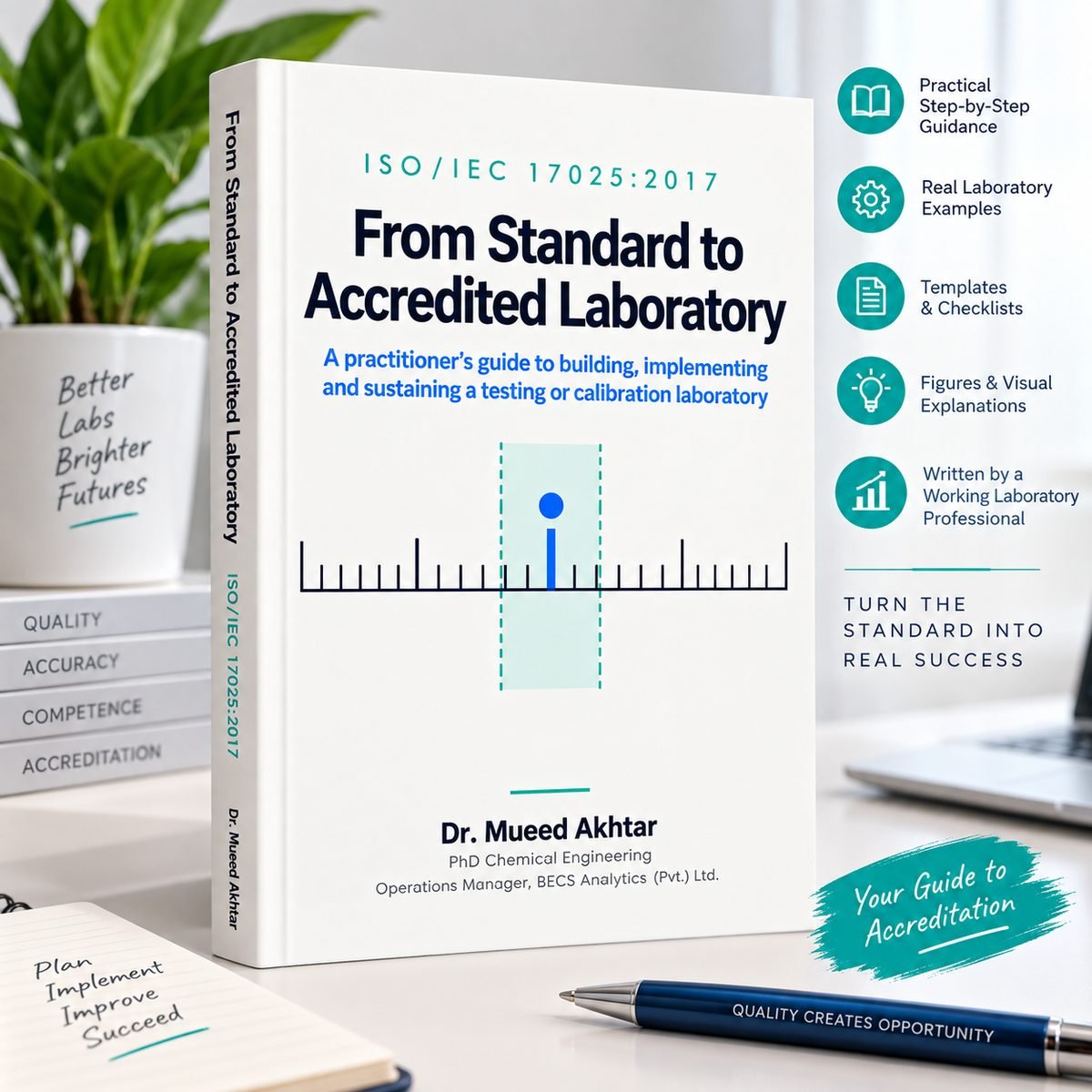
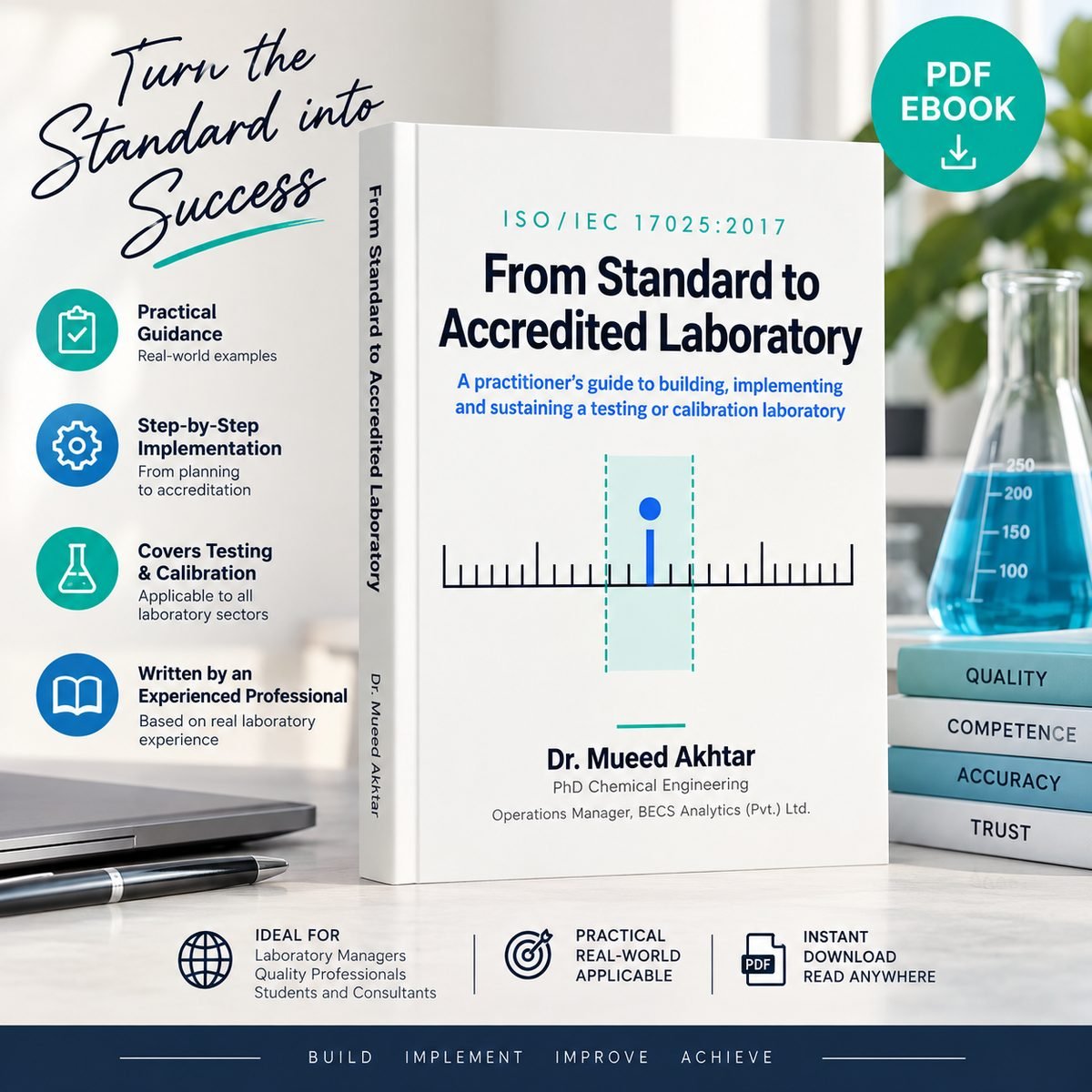
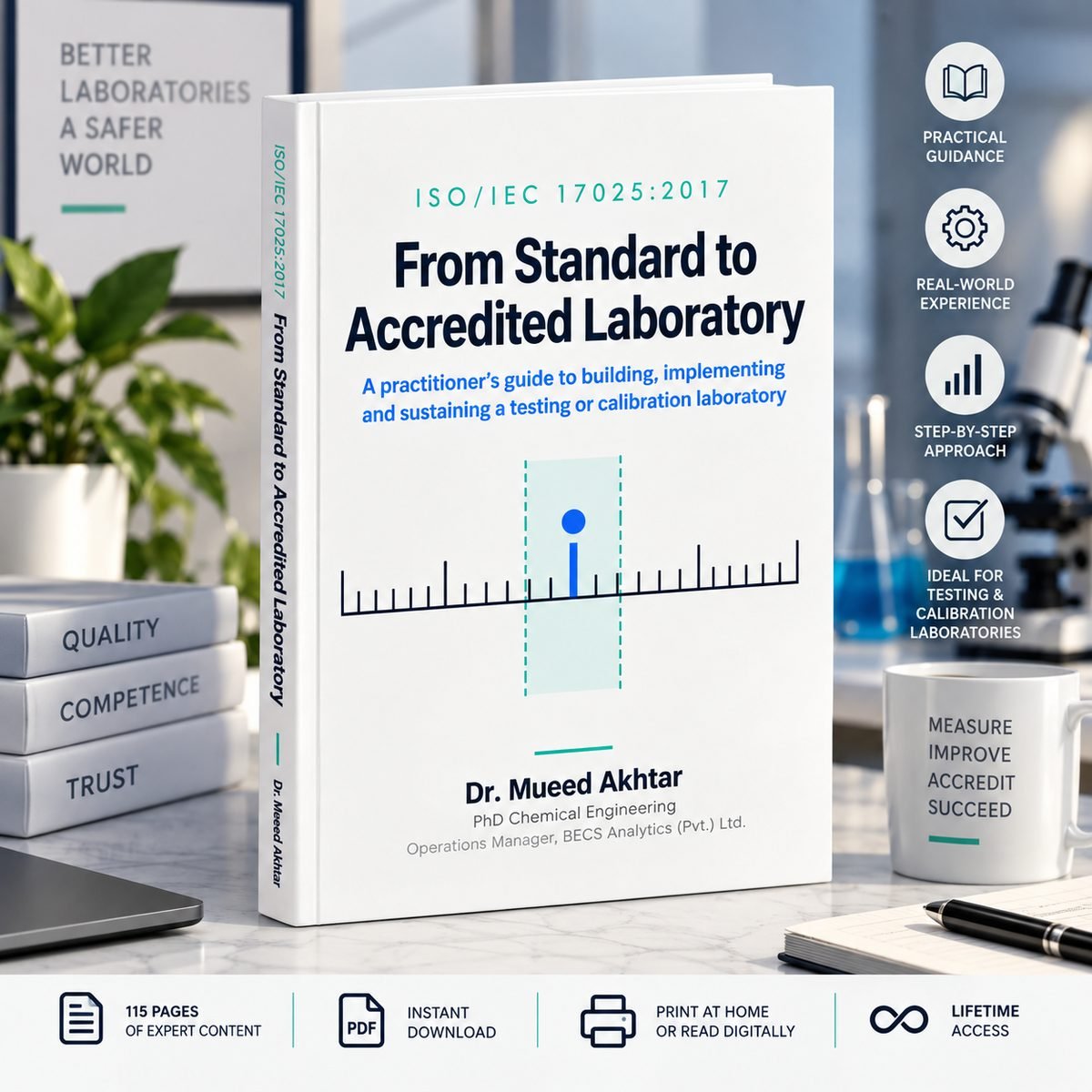
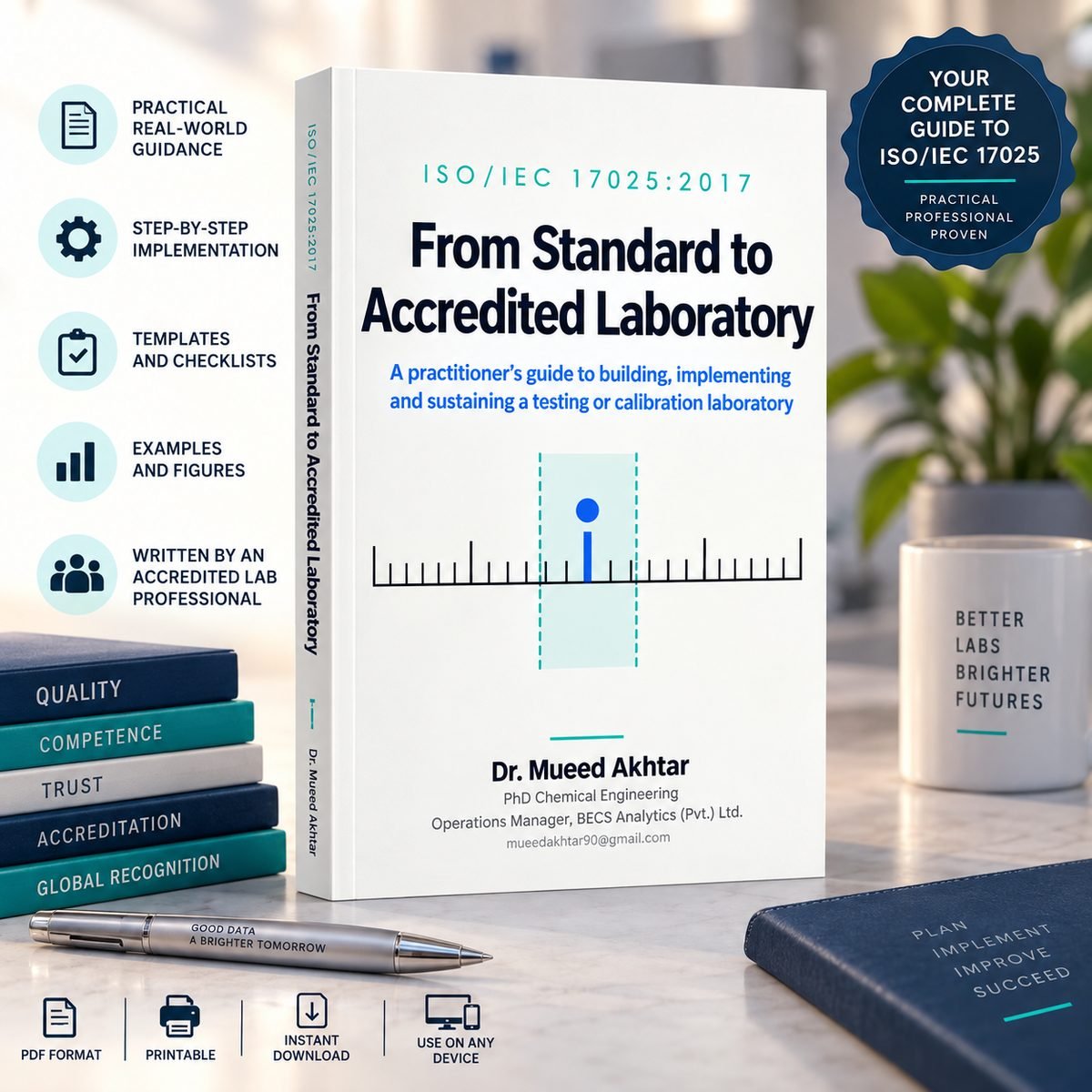
ISO/IEC 17025: From Standard to Accredited Laboratory is a practitioner’s guide to building, implementing and sustaining a testing or calibration laboratory. Here is what you get:
- 115 pages of practical, real-world guidance
- Clause-by-clause explanations of ISO/IEC 17025:2017 in plain language
- A step-by-step implementation roadmap, from planning to accreditation
- Templates and checklists for your quality manual, procedures and internal audit
- Figures, visual explanations and worked examples
- Guidance on method validation, measurement uncertainty, proficiency testing and corrective action
- Suitable for both testing and calibration laboratories in any sector, worldwide
Who this guide is for
Laboratory managers, quality managers, technical managers, QA/QC professionals, analytical chemists, consultants and students. It is equally useful for a new laboratory preparing for its first assessment and for an accredited laboratory that wants a stronger, easier-to-maintain system.
About the author
Dr. Mueed Akhtar holds a PhD in Chemical Engineering and is Operations Manager at BECS Analytics (Pvt.) Ltd., an ISO/IEC 17025:2017 accredited testing laboratory in Lahore, Pakistan (PNAC, LAB 316) covering food and feed, water and wastewater, and fertilizer testing. He has built the laboratory’s quality management system and accreditation from the ground up since 2019, and the book is based on that hands-on experience rather than theory alone.
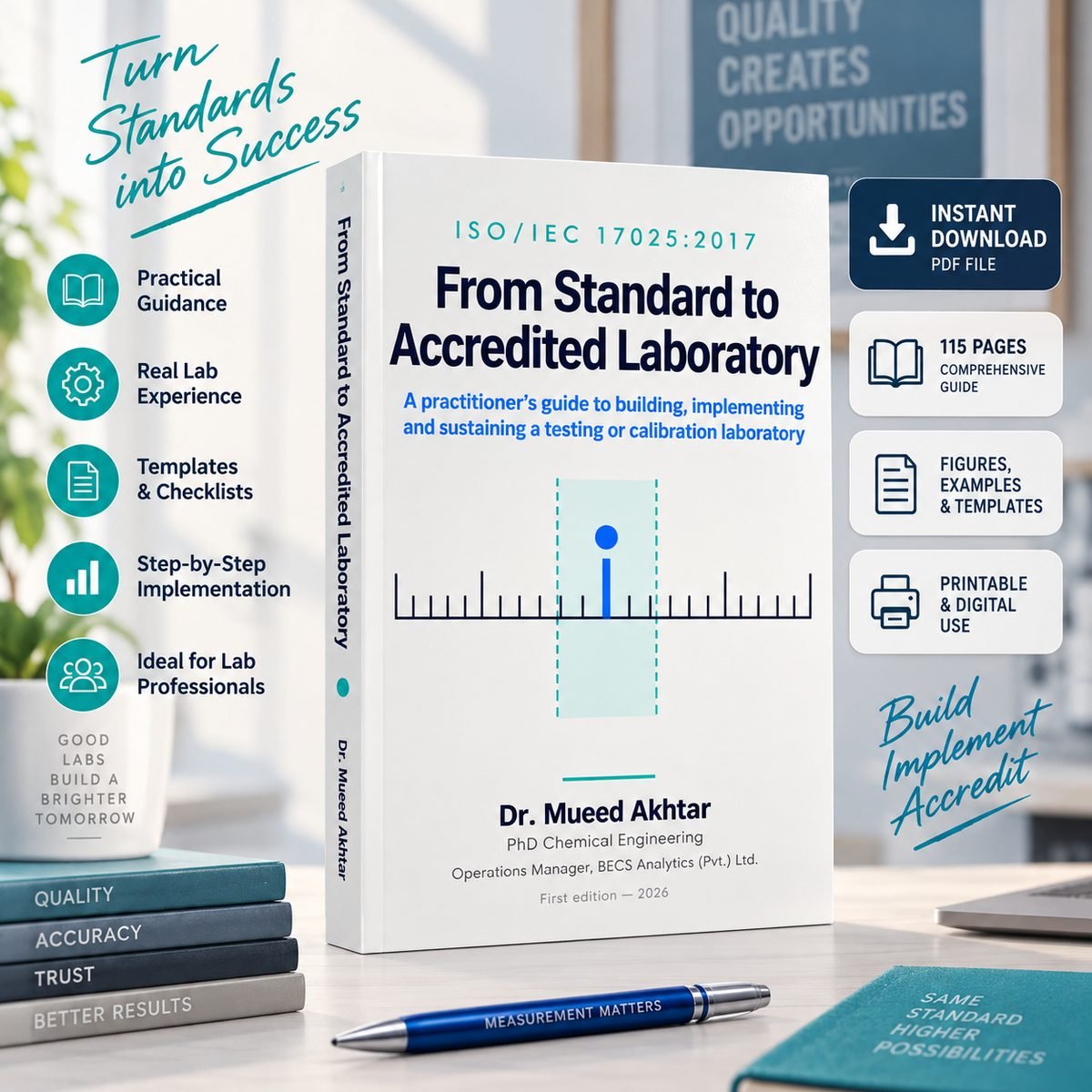
Where to buy: Etsy PDF, Kindle and paperback
| Format | Price | Best for | Link |
|---|---|---|---|
| PDF instant download | $19.99 | Printing, annotating and using the checklists with your team | Buy on Etsy |
| Kindle eBook | $12.50 | Reading on Kindle, phone or tablet | Buy on Amazon Kindle |
| Paperback | $17.00 | A desk reference for audits and assessments | Buy the paperback |
Prices shown in USD at the time of writing and may change on Etsy and Amazon.
Looking for a product page with all formats in one place? See the ISO/IEC 17025 Guide listing. Need a full set of ready-made documents too? Browse the ISO/IEC 17025 Templates Bundle (125 editable documents) or the made-to-order ISO/IEC 17025 Documentation Package.
ISO 17025 FAQs
What is ISO 17025?
ISO/IEC 17025 is the international standard that sets the general requirements for the competence, impartiality and consistent operation of testing and calibration laboratories. Laboratories that meet it can be accredited by a national accreditation body, which shows that their results are technically valid and trusted internationally.
What is the difference between ISO 17025 and ISO 9001?
ISO 9001 certifies that an organisation has a quality management system. ISO 17025 goes further for laboratories: it is assessed through accreditation and checks technical competence, including method validation, measurement uncertainty, metrological traceability, staff competence and the validity of every reported result.
How long does ISO 17025 accreditation take?
Most laboratories need roughly 6 to 18 months from gap analysis to accreditation. The timeline depends on the size of the scope, how many methods need validation, whether documentation already exists, staff availability and the accreditation body’s assessment schedule.
What documents are required for ISO 17025?
A typical ISO 17025 laboratory QMS includes a quality manual or management system policy, procedures for each clause, controlled forms and records, method SOPs, validation and verification reports, measurement uncertainty budgets, equipment and calibration records, training and competence records, internal audit and management review records, and corrective action logs.
Is ISO 17025 accreditation mandatory?
ISO 17025 is voluntary as a standard, but it is often required in practice. Regulators, government tenders, export markets and major customers frequently accept test or calibration reports only from ISO 17025 accredited laboratories.
Who grants ISO 17025 accreditation?
Accreditation is granted by a national accreditation body that is a signatory to the ILAC Mutual Recognition Arrangement, such as PNAC in Pakistan, UKAS in the United Kingdom, A2LA and ANAB in the United States, and NABL in India. ILAC MRA signatories recognise each other’s accreditations.
Does this ISO 17025 guide cover calibration laboratories?
Yes. From Standard to Accredited Laboratory is written for both testing laboratories and calibration laboratories, and it covers the shared requirements such as metrological traceability, measurement uncertainty, equipment control and the validity of results.
Which format of the book should I buy?
Choose the PDF on Etsy if you want to print pages, annotate them and use the checklists with your team. Choose the Kindle eBook on Amazon for reading on any device, or the paperback if you want a desk reference for audits and assessments.
What is measurement uncertainty in ISO 17025?
Measurement uncertainty is a quantified range around a result within which the true value is expected to lie at a stated confidence level. ISO/IEC 17025 clause 7.6 requires laboratories to identify the contributions to uncertainty and evaluate it for their tests and calibrations, and to report it where it is relevant to the validity or application of the result.
What is proficiency testing in ISO 17025?
Proficiency testing is an external check in which a provider sends the same samples to many laboratories and compares their results. ISO/IEC 17025 clause 7.7 requires laboratories to monitor the validity of their results, and accreditation bodies expect participation in proficiency testing or interlaboratory comparisons that covers the accredited scope.
How often is an ISO 17025 laboratory assessed?
After initial accreditation, most accreditation bodies carry out surveillance assessments roughly once a year and a full reassessment every few years. The exact cycle is set by each accreditation body, so check the rules of the body you apply to.
How much does ISO 17025 accreditation cost?
There is no single price. Costs depend on the accreditation body’s application and assessment fees, the number of methods and sites in your scope, proficiency testing, equipment calibration, reference materials, staff training and whether you use a consultant. A practical guide and ready-made templates can reduce the time and consultancy cost of building the system.
Key takeaways
- ISO/IEC 17025:2017 proves a laboratory is competent, impartial and produces valid results.
- Accreditation is granted by ILAC MRA signatory bodies and is recognised internationally.
- The route is gap analysis, scope, QMS documentation, technical competence, internal audit, then assessment.
- Most nonconformities come from weak uncertainty estimates, incomplete records and shallow root cause analysis.
- From Standard to Accredited Laboratory gives you the full roadmap, templates and checklists: PDF on Etsy or Kindle on Amazon.
Related topics: iso 17025, iso 17025 guide, lab accreditation, quality manual, quality management, laboratory qms, accreditation manual, internal audit, checklist template, editable template, testing lab, compliance document, instant download, quality management system QMS implementation, method validation verification protocol, measurement uncertainty metrology traceability, internal audit nonconformity corrective action, proficiency testing quality control charts, accreditation assessment preparation checklist, analytical chemist lab manager SOP documents.