
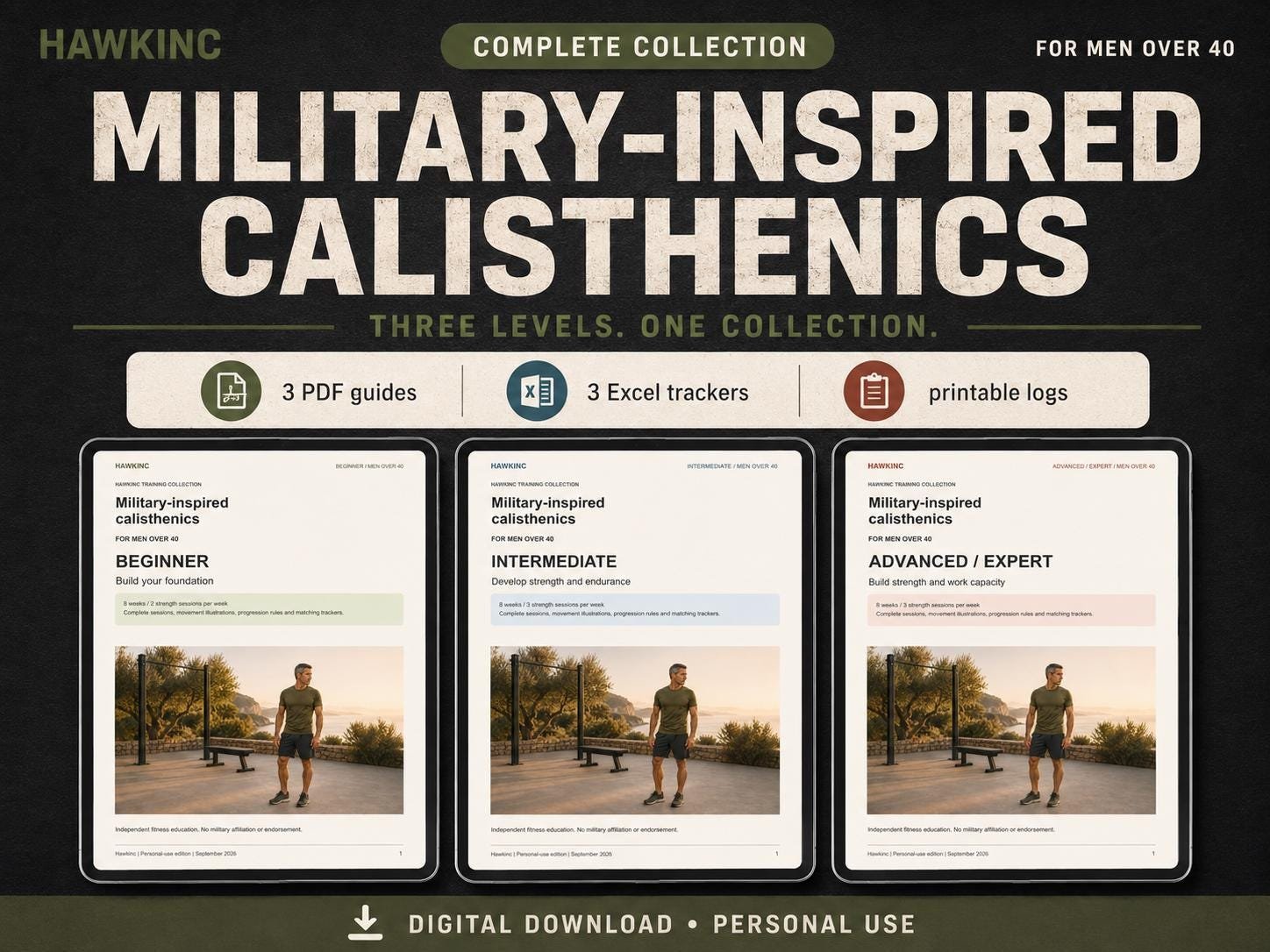
If you are over 40 and want to get genuinely strong again without a gym membership, a rack of dumbbells, or joints that ache for two days after every session, bodyweight training is one of the smartest tools you have. This guide explains how a military-inspired calisthenics approach works, why it suits men over 40 so well, and how to follow a structured 8-week plan across three levels.
Why calisthenics works so well after 40
In your 40s and beyond, the goal shifts. You are no longer training just to look a certain way for the summer — you are training to move well, stay strong, protect your joints, and keep the energy to do everything else in your life. Calisthenics fits that goal almost perfectly. It builds real, usable strength through full ranges of motion, it is gentle on the joints when it is scaled correctly, and it can be done at home, in a park, or in a hotel room while travelling.
The catch is that most free workouts online are written for 22-year-olds. They skip the warm-ups, ignore recovery, and assume you can already do 20 clean push-ups and a set of pull-ups. What men over 40 actually need is a plan that meets them where they are and progresses sensibly from there.
What “military-inspired” really means here
Military-inspired does not mean punishing yourself with endless burpees until you are sick. It means borrowing the parts of military physical training that actually build durable fitness: consistency, progressive overload, movement quality, and a balance of strength, endurance, and mobility. It is disciplined and structured — but it is scaled for a 40-plus body, not a boot-camp recruit.
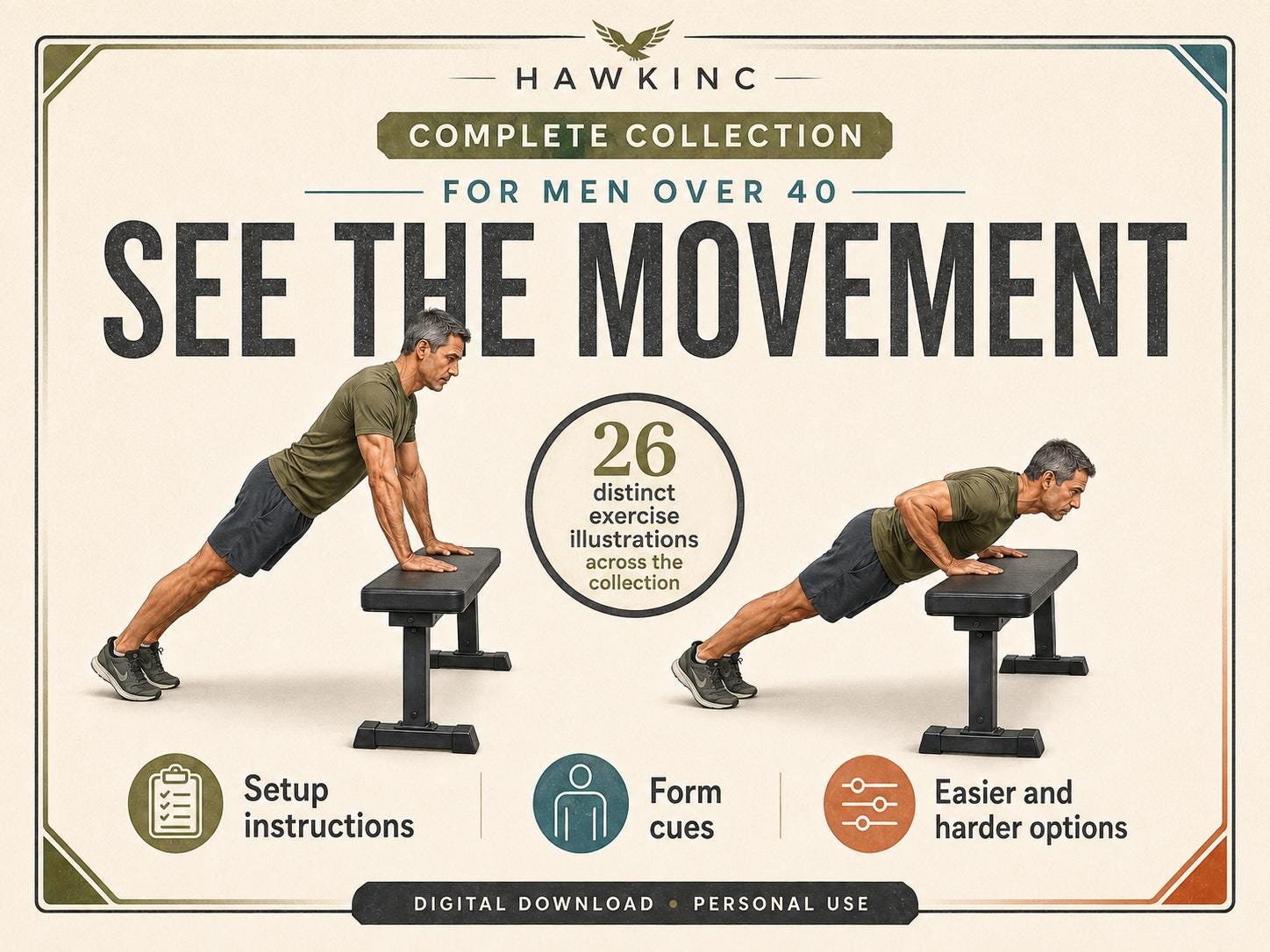
Every exercise is chosen because it earns its place: push-ups and their easier incline variations, rows, squats, hinges, planks, and carries. Each one comes with setup instructions, form cues, and both an easier and a harder option so you can match the difficulty to how you feel on any given day.
Three levels, one clear path
The biggest mistake men over 40 make is starting too hard, getting sore or hurt, and quitting in week two. The fix is to start at the right level. This collection is built around three of them, so you can begin where you are today and keep moving up as you get stronger.
- Beginner — build your foundation. 2 strength sessions per week, around 25–40 minutes each. Ideal if you are returning to training after a long break.
- Intermediate — develop strength and endurance. 3 sessions per week, around 35–50 minutes. For those who already train fairly consistently and control the basic movements well.
- Advanced / Expert — build strength and work capacity. 3 sessions per week, around 45–65 minutes. For experienced trainers with solid movement control and good recovery.
How the 8-week structure keeps you progressing
Each level runs for eight weeks and follows a simple, sustainable rhythm: train, record, review, and adjust. You get weekly exercise prescriptions with reps, sets, and rest guidance, so you always know exactly what to do. Crucially, weeks 4 and 8 are lighter recovery weeks — the part almost every DIY plan forgets. Those lighter weeks are what let a 40-plus body absorb the work, reduce injury risk, and come back stronger instead of burning out.
Track your work so progress is visible
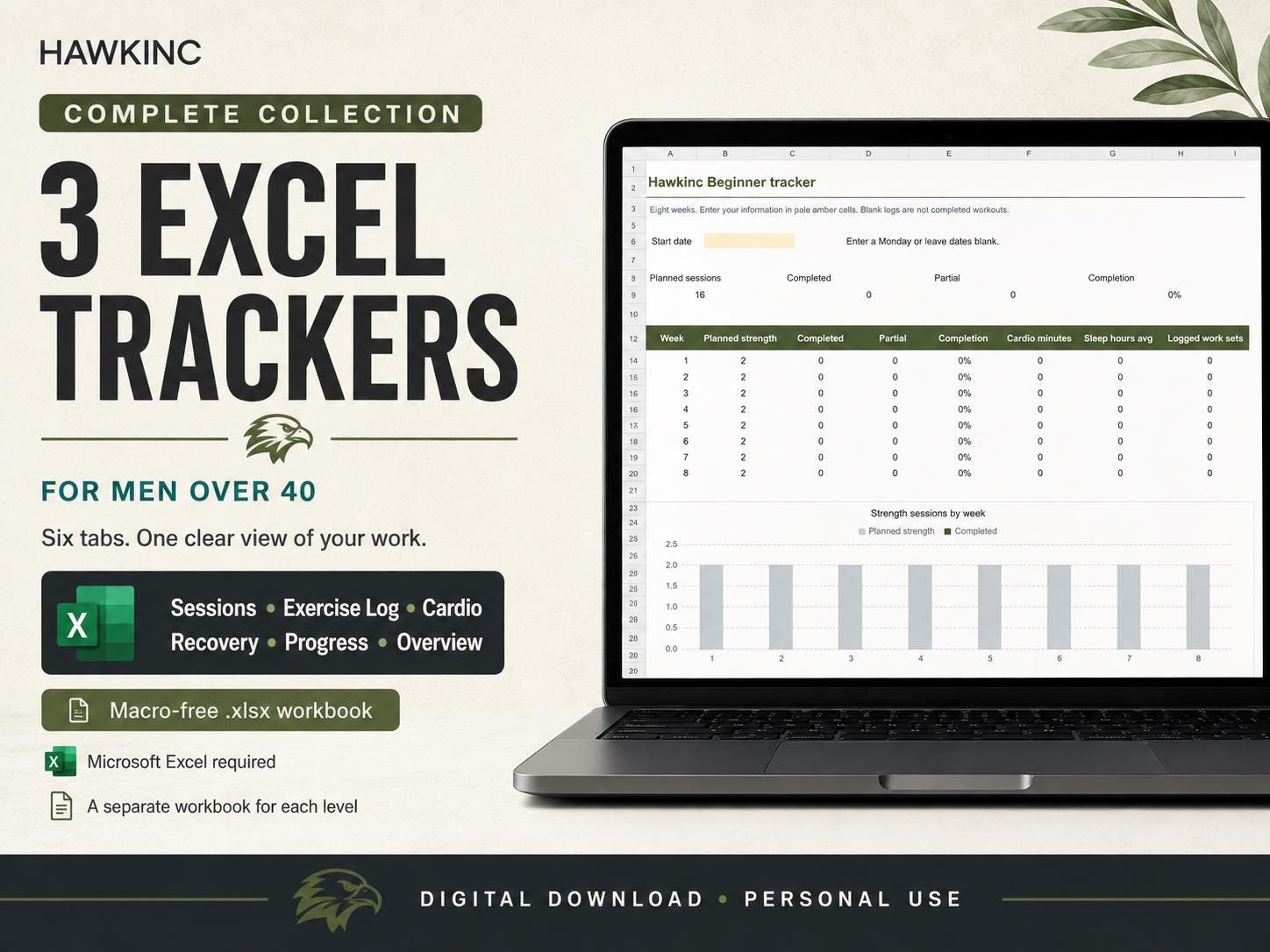
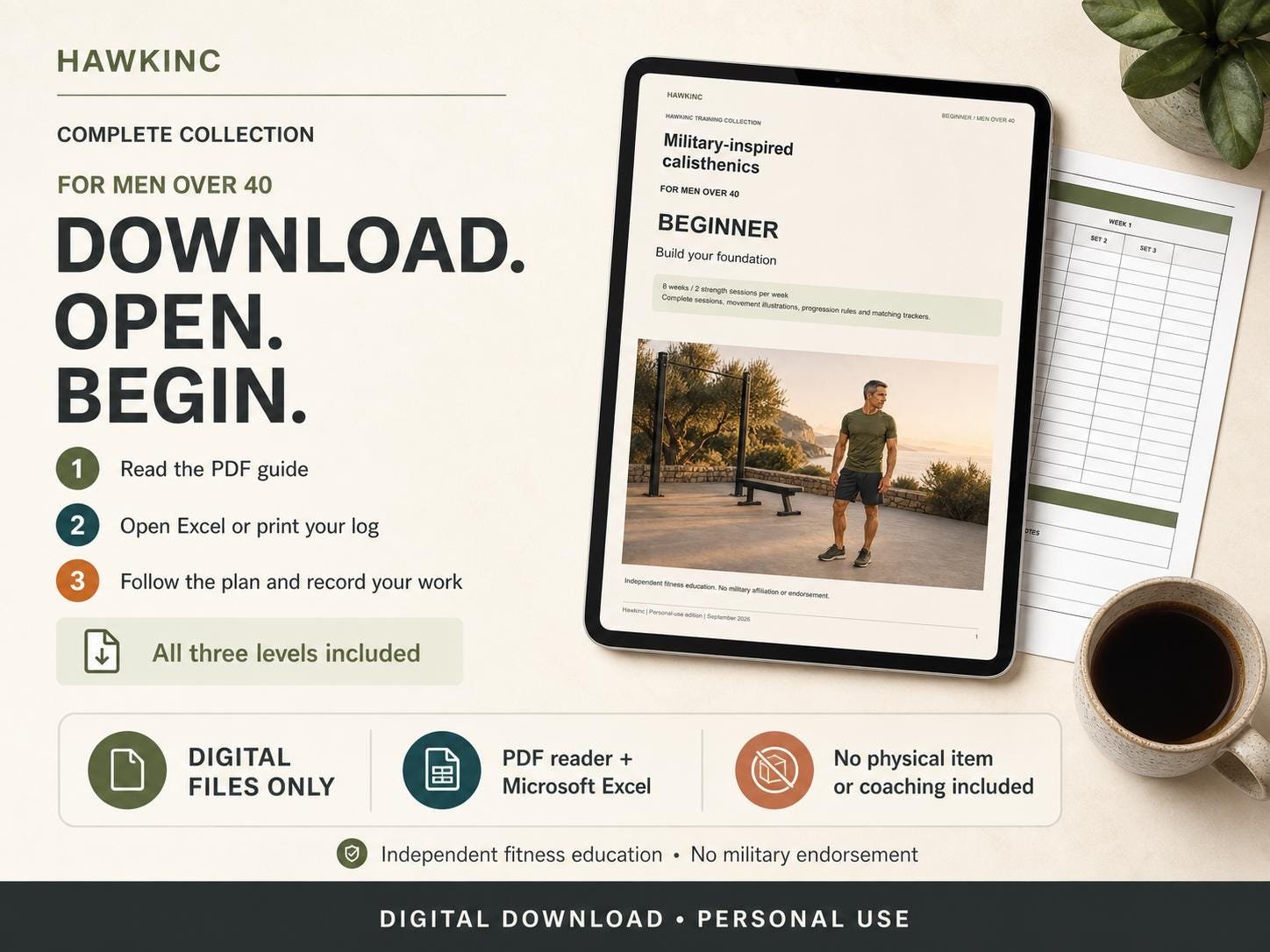
What gets measured gets improved. The collection includes three Excel trackers (with tabs for sessions, exercise logs, cardio, recovery, progress, and an overview) plus matching printable logs in A4 and US Letter for anyone who prefers pen and paper. Record your sets, your sleep, your energy, and your soreness, and you will be able to see — not guess — whether you are ready to push harder.
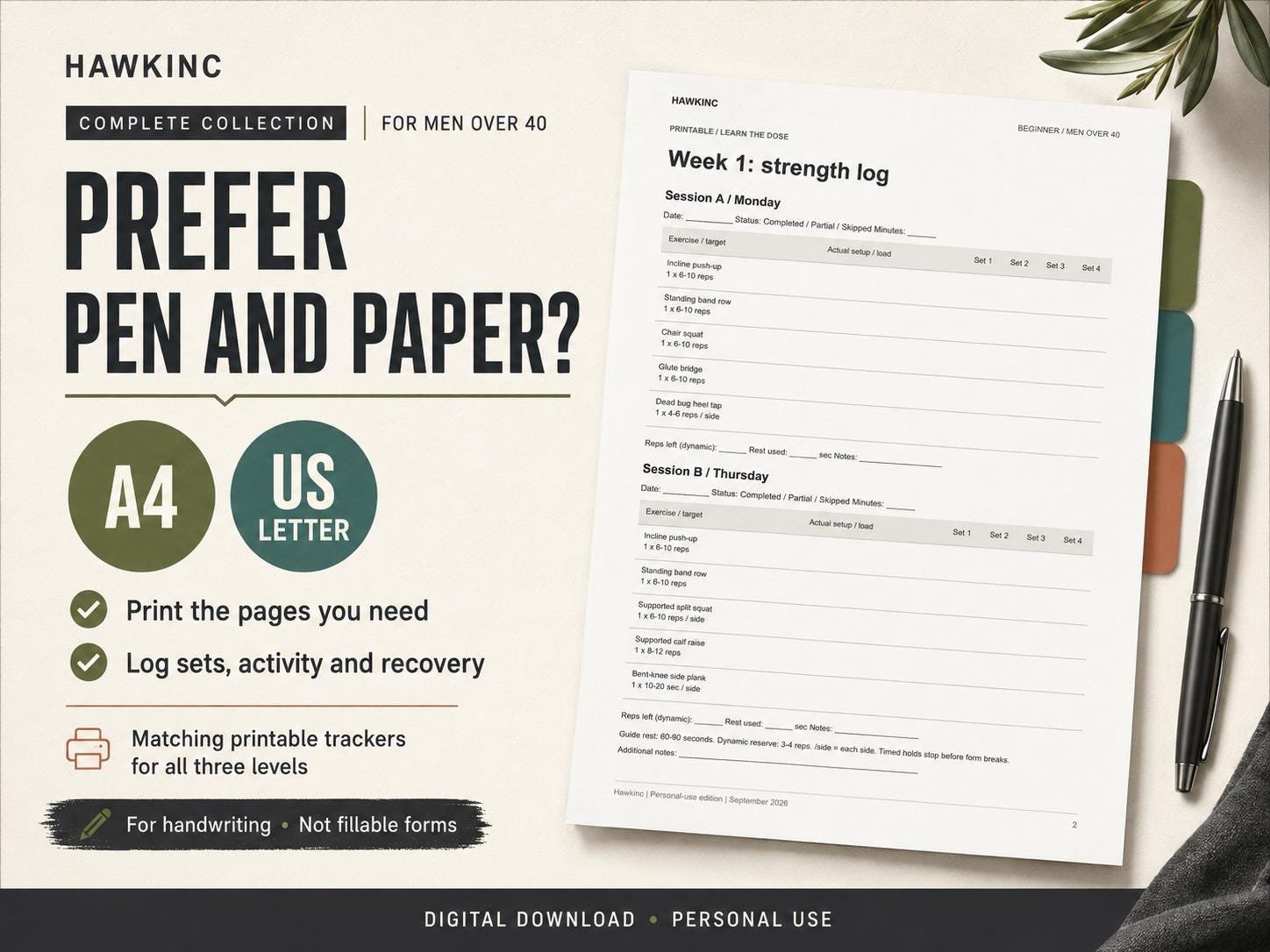
A good rule: use the same setup for fair comparisons, check in around week 4, and review your consistency at week 8 before you increase difficulty. Your log is a record of your effort, not a verdict on your worth — some weeks are lighter than others, and that is completely normal.
What you need to get started
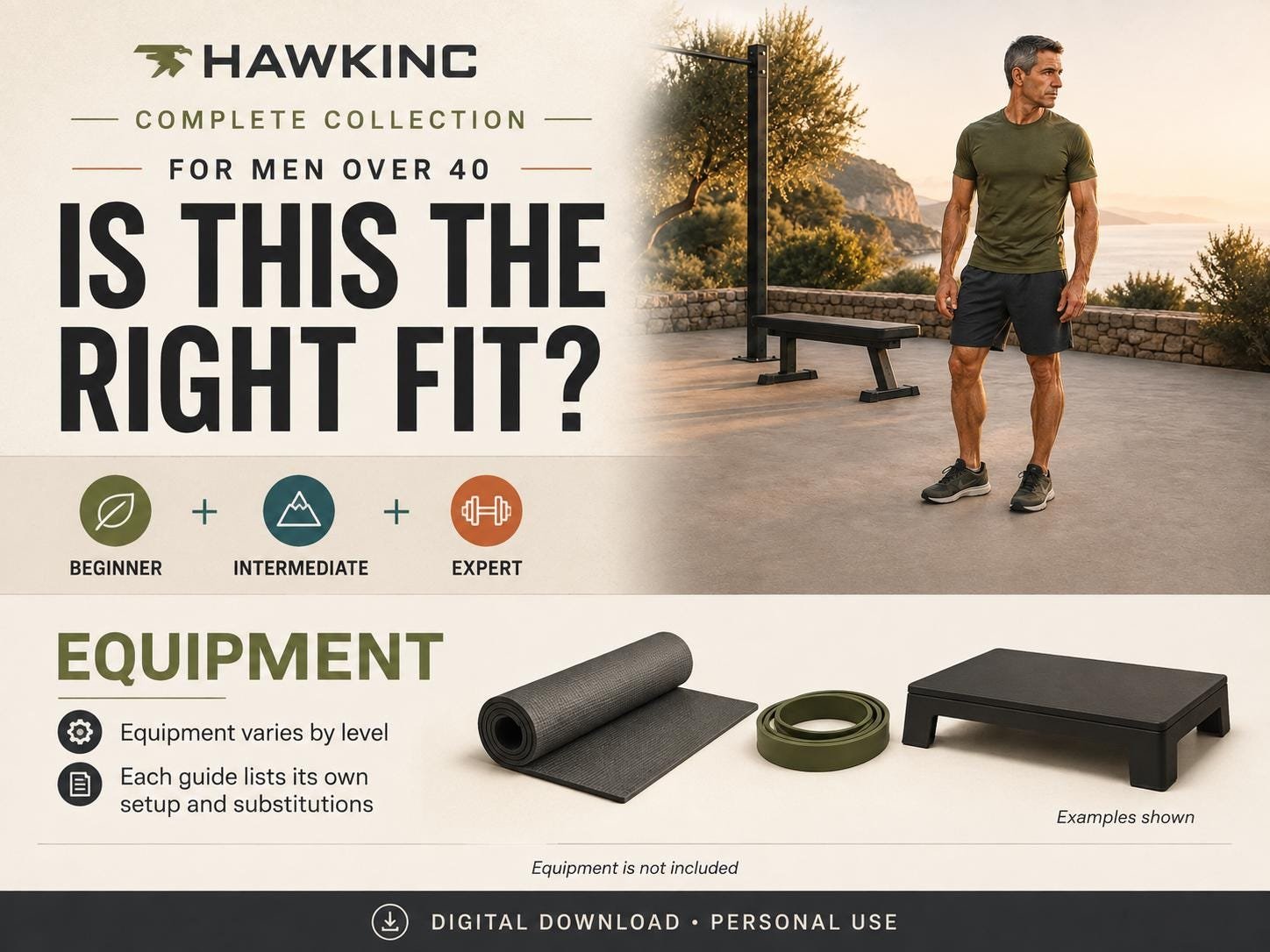
Most of the work is pure bodyweight. Depending on the level, a few simple items help — an exercise mat, a resistance band, and a sturdy step or low bench — and each guide lists its own setup and substitutions so you are never stuck. You do not need a full home gym to begin.
Ready to start?
The complete collection brings all three levels together in one download — three illustrated guides, three Excel trackers, and printable logs — so you can start today and keep training for months. See the full Military-Inspired Calisthenics Complete Collection on our shop, or grab it directly on Etsy for $11.99.
This article is independent fitness education for general information only and is not medical advice. If you have a health condition or have been inactive for a while, check with your doctor before starting a new exercise program.