
By Dr. Mueed Akhtar, PhD (Chemical Engineering), founder of HawkInc
Quick answer: A good menopause workout plan combines two or three full-body strength sessions a week with daily walking and short mobility work. Start with bodyweight or light dumbbells, add reps or load every two weeks, and include bone-loading moves such as squats and step-ups. Over 12 weeks, steady progression matters more than intensity.
Key takeaways
- Aim for at least two strength days a week, working all major muscle groups, as public health guidelines recommend.
- Weight-bearing and resistance exercise both support bone health, which matters more after menopause.
- Progress slowly: change one thing at a time, such as reps, sets or weight, every one to two weeks.
- A simple 12-week structure (learn, build, strengthen) keeps you consistent without guesswork.
- Check with your doctor first if you have a heart, bone or joint condition.
This guide is for general information and is not medical advice; talk to your doctor before starting a new exercise or health routine.
Table of Contents
Why does strength training matter more after 40?
Strength training matters more after 40 because muscle and bone both decline gradually with age, and the drop in oestrogen around menopause speeds up bone loss. Lifting weights, or your own bodyweight, gives muscles and bones a reason to stay strong, which supports balance, posture, everyday tasks and long-term independence. That is why strength training for women over 40 sits at the heart of this menopause workout plan.
The National Institute on Aging notes that women lose bone faster in the years after menopause and lists weight-bearing and resistance exercise among the ways to help protect bones and lower the risk of osteoporosis. The NHS also suggests regular exercise, including strength-building activities, as one of the things you can do to help with menopause and perimenopause. In practical terms, stronger legs make stairs easier, a stronger back makes carrying shopping easier, and better balance lowers your chance of a fall.
How many days a week should you strength train during menopause?
Two to three days a week is the sweet spot for most women in menopause, and it is the backbone of any good menopause workout plan. The CDC advises adults to do muscle-strengthening activity on at least two days a week, alongside 150 minutes of moderate aerobic activity. Leave at least one rest day between strength sessions so muscles can recover.
A realistic week might look like this: strength on Monday and Thursday, an optional third session on Saturday, and brisk walks of 20 to 30 minutes on the other days. If you are new to exercise, begin with two sessions and add the third only once you recover well.
What does a 12-week menopause workout plan look like?
A 12-week menopause workout plan usually moves through three four-week phases: learning the movements, building volume, then adding load. Each phase keeps the same core exercises so you can see clear progress, while the warm-up, mobility work and walking stay constant throughout. Here is a sample structure you can follow or adapt:
| Weeks | Focus | Strength sessions | Sets x reps | How to progress |
|---|---|---|---|---|
| 1 to 4 | Learn the moves | 2 a week | 2 x 8 to 10 | Bodyweight only; slow, controlled reps |
| 5 to 8 | Build volume | 2 to 3 a week | 3 x 10 to 12 | Add a third set, then light dumbbells or a band |
| 9 to 12 | Get stronger | 3 a week | 3 x 8 to 10 | Heavier weight with fewer reps; keep perfect form |
Each session follows the same pattern: a 5 to 8 minute warm-up (marching, hip circles, arm swings, cat-cow), the main strength block, a few bone-loading moves, then core and posture work. Alternate two workouts so every muscle group gets trained:
- Workout A (lower body and core): sit-to-stand squats, glute bridges, step-ups, side-lying leg raises, dead bug.
- Workout B (upper body and back): wall or incline push-ups, bent-over rows, overhead press, band pull-aparts, bird dog.
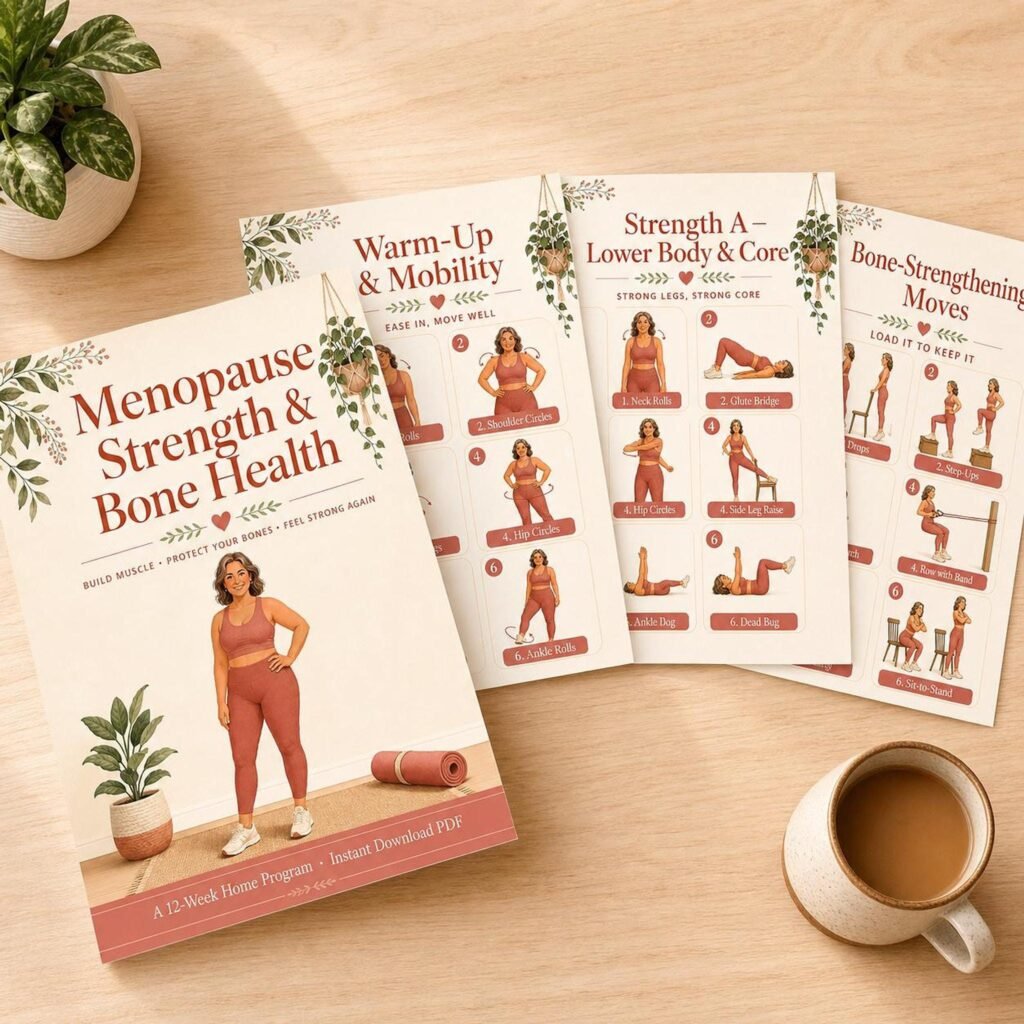
Want this laid out for you? The HawkInc Menopause Workout Plan is a 12-page printable with both workouts, bone-loading moves and a weekly tracker. $3.59 on Etsy.
Which exercises are best for bone health after menopause?
The best exercises for bone health combine impact or weight-bearing with resistance. Squats, step-ups, lunges, rows and presses load the hips, spine and wrists, the sites most prone to osteoporotic fractures. Brisk walking and gentle heel drops add impact. Progressing the load over time is what gives bones a reason to adapt, so build these moves into your menopause workout plan two or three times a week.
| Exercise | Main area loaded | Easier version | Harder version |
|---|---|---|---|
| Sit-to-stand squat | Hips, thighs | Higher chair, hands on knees | Hold a dumbbell at the chest |
| Step-up | Hips, legs | Low step, hold a rail | Higher step, dumbbells in hands |
| Bent-over row | Upper back, spine | Band anchored to a door | Heavier dumbbells |
| Wall push-up | Chest, arms, wrists | Stand closer to the wall | Kitchen counter, then floor on knees |
| Heel drops | Hips, spine (impact) | Rise onto toes only | Drop heels firmly, 10 to 20 times |
If you already have osteoporosis or low bone density, ask your doctor or a physiotherapist before doing impact moves, deep forward bends or twisting under load.
Should women in menopause lift heavy weights?
Women in menopause can lift moderately heavy weights once they have learned good form, and many benefit from it. “Heavy” simply means a weight that makes the last two reps of a set feel hard while your technique stays clean. Build up over weeks, not days, and never sacrifice form for a bigger number.
A simple test: if you could do five more reps with good form, the weight is too light for strength work. If your back arches, your knees cave in or you hold your breath, it is too heavy. Note your weights in a tracker so you can increase them in small steps, usually 0.5 to 1 kg at a time.
How to start strength training safely as a beginner
To start a menopause workout plan safely, check with your doctor if you have any health condition, learn each move with bodyweight first, and keep sessions short. Breathe out as you lift, rest when you need to, and stop if anything causes sharp pain. Consistency over 12 weeks will do far more than a hard first week.
- Get the all-clear from your doctor if you have heart, bone, joint or blood pressure concerns.
- Pick two fixed days for strength and put them in your calendar.
- Warm up for 5 to 8 minutes every time.
- Do 2 sets of 8 to 10 reps of each move, slowly, using a chair or wall for balance.
- Write down what you did and how it felt.
- Every one to two weeks, change one thing: add reps, add a set, or add a little weight.
- Walk on most other days and include a rest day after each strength session.
Eating enough protein also supports muscle as you train. Our free protein intake calculator gives a starting estimate, and the heart rate zone calculator helps you pace your walks.
A look inside a 12-week menopause workout plan
Here is how the HawkInc plan puts the ideas above on paper. The overview page maps out all 12 weeks, the Strength A page shows each lower body and core move with a simple illustration, and the tracker lets you tick off sessions and note how you felt. Seeing a full week in front of you removes the daily “what should I do today?” decision.
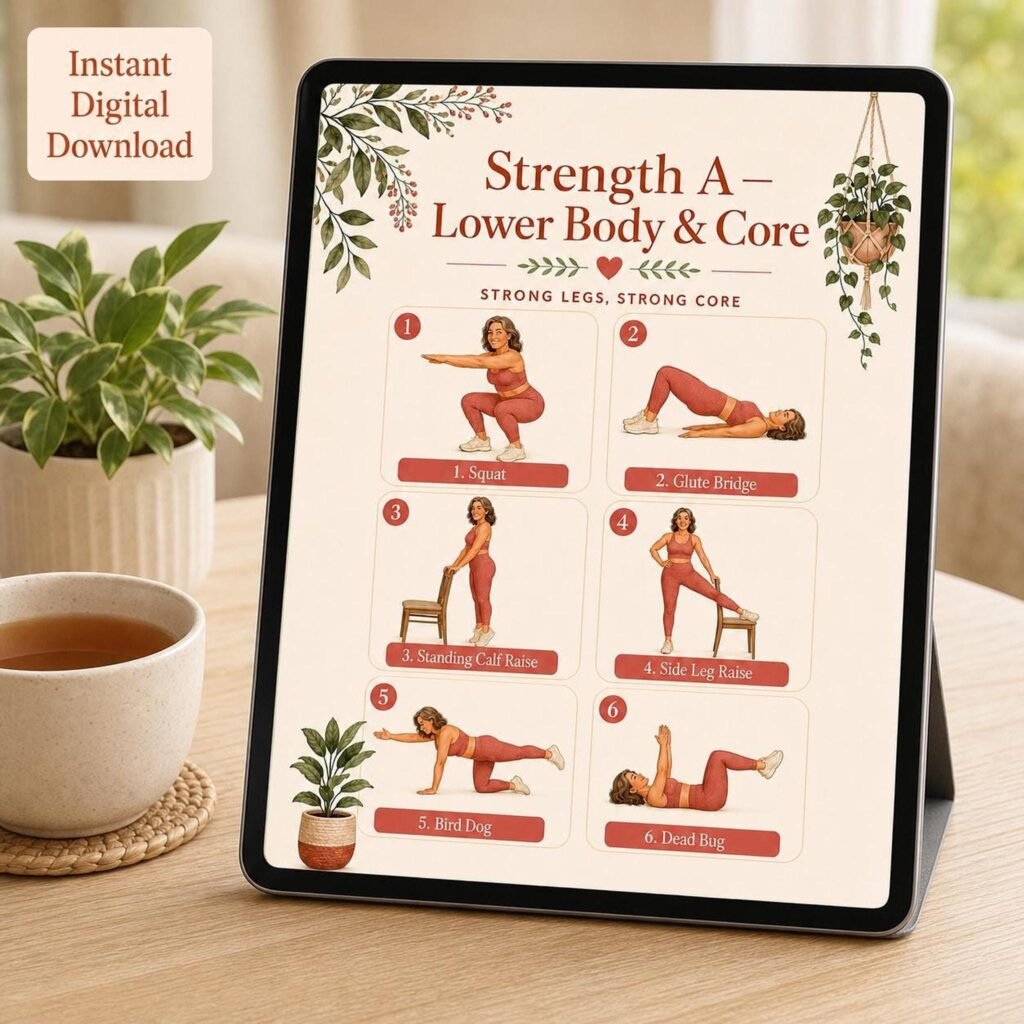
Worked example: In week 1, a beginner might do 2 sets of 8 sit-to-stand squats from a dining chair. By week 6, that becomes 3 sets of 12 holding a 2 kg dumbbell. By week 11, it could be 3 sets of 8 with a 5 kg dumbbell and a slightly lower seat. Each step is small, and that is the point.
If you are a man reading this for a partner, or want a bodyweight plan of your own, see our guide to calisthenics for men over 40. More plans live in the Health & Wellness hub.
Frequently asked questions
Can strength training help with menopause belly fat?
Strength training builds muscle, and muscle helps you stay active and manage weight over time. It cannot target fat from one area, though. Many women notice changes in shape when they combine two or three strength sessions a week with daily walking, enough sleep and a balanced diet that includes protein.
Does exercise help with hot flushes?
The research on exercise and hot flushes is mixed, so do not expect workouts alone to stop them. Regular activity does help many women with sleep, mood and energy, which can make symptoms easier to live with. If hot flushes affect your daily life, talk to your doctor about treatment options.
Is it too late to start lifting weights at 50 or 60?
No. Muscle responds to training at any age, and the CDC recommends muscle-strengthening activity for older adults too. Start with bodyweight moves and light loads, learn good form, and progress slowly. If you have osteoporosis or a joint problem, ask your doctor or a physiotherapist which moves suit you.
How long until I see results from a menopause workout plan?
Most women feel stronger and more confident within three to four weeks, mainly because the nervous system learns the movements. Visible changes in muscle tone usually take eight to twelve weeks of steady training. Track your sessions and the weights you use, because those numbers show progress before the mirror does.
Can I strength train with joint pain or arthritis?
Often yes, with adjustments. Use a smaller range of motion, slower lifts, a chair for support and lighter weights, and stop any move that causes sharp pain. Mild muscle soreness the next day is normal; pain in the joint itself is not. A physiotherapist can suggest safe alternatives for your joints.
Do I need cardio as well as strength training?
Yes, both help. The CDC recommends 150 minutes of moderate aerobic activity a week plus at least two days of muscle-strengthening activity. Brisk walking on non-strength days is an easy way to cover the aerobic part, and it adds gentle weight-bearing work for your bones.
Get the 12-week plan
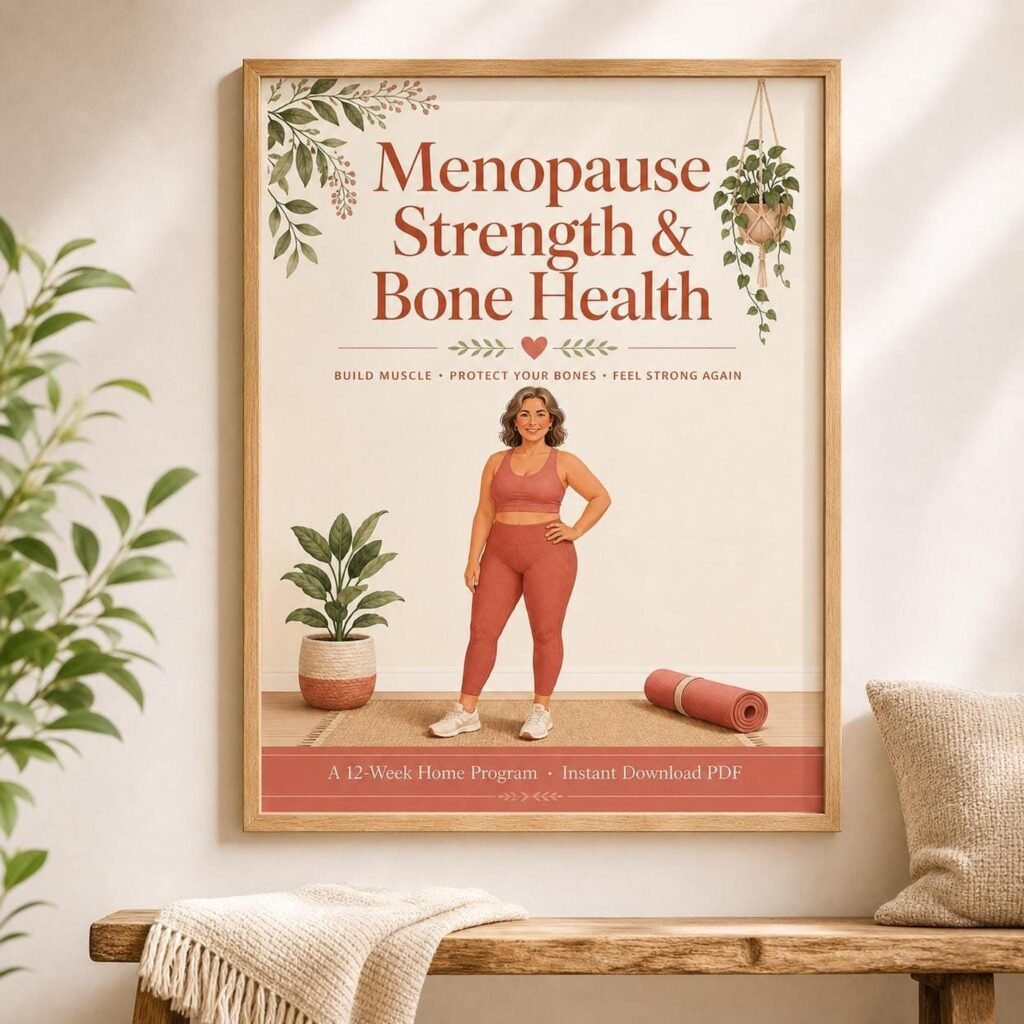
Follow a ready-made 12 weeks at home: warm-up, Strength A and B, bone-loading moves, core and a weekly tracker in A4 and US Letter. $3.59 on Etsy.
This guide is for general information and is not medical advice; talk to your doctor before starting a new exercise or health routine.