
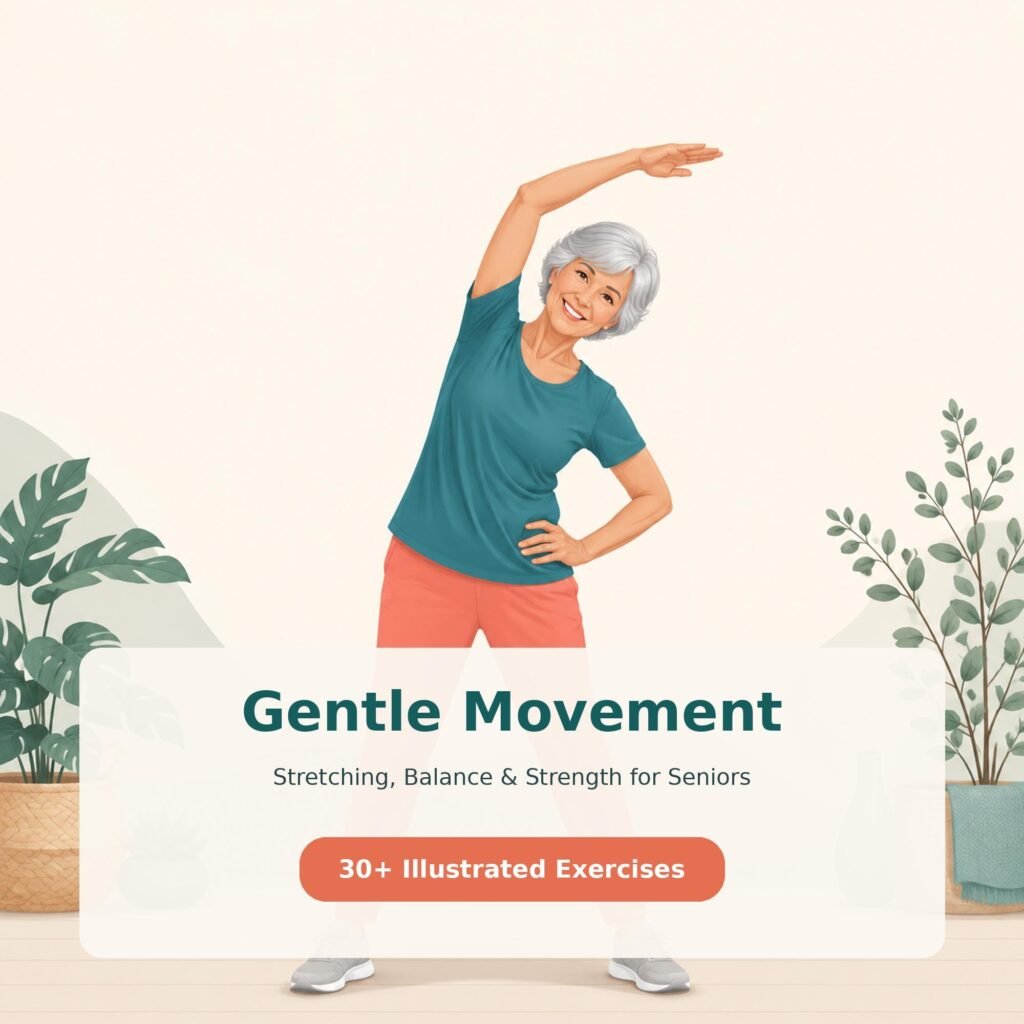
Quick answer: Chair exercises for seniors are gentle seated or chair-supported moves that build strength, flexibility and balance without getting down on the floor. Warm up for five minutes, then work through 10 to 15 easy moves for 15 to 20 minutes, three or more days a week. Stop if anything hurts, and check with your doctor first.
By Dr. Mueed Akhtar, PhD (Chemical Engineering), founder of HawkInc
Key takeaways
- Use a sturdy chair with no wheels, and sit with your feet flat on the floor.
- Mix three kinds of movement: mobility, strength and balance. The 15 moves below cover all three.
- Short and regular beats long and rare. Fifteen to twenty minutes on most days is a sound target.
- The CDC advises older adults to do muscle-strengthening activity on at least two days a week and to include balance activities.
- Pain, dizziness, chest discomfort or unusual breathlessness means stop and get advice.
Are chair exercises good for seniors?
Yes, for most older adults. Chair exercises let you work your muscles and joints while the chair looks after your balance, which lowers the risk of a fall while you build confidence. They suit people who are new to exercise, coming back after illness, or less steady on their feet, and they count toward weekly activity.
The CDC physical activity guidelines for older adults recommend moderate aerobic activity across the week, muscle strengthening on two or more days and activities that improve balance. If standing exercise is hard right now, the NHS publishes its own sitting exercises for older people, which shows how much can be done from a chair.
How do you set up safely before you start?
Pick a solid chair without wheels, place it on a non-slip floor, wear supportive shoes and keep water nearby. Sit tall near the front of the seat with your feet flat and hip-width apart. Breathe steadily throughout, never hold your breath, and move only within a range that feels comfortable today.
- Put the chair against a wall or on a rug that will not slide.
- Clear the space around you so your arms and legs can move freely.
- Sit with your back away from the backrest, feet flat, knees over ankles.
- Do a quick check-in: if you feel unwell, dizzy or in pain, rest today.
- Keep a phone within reach if you exercise alone.
What are the best chair exercises for seniors? 15 gentle seated moves
The best chair exercises for seniors are simple moves that cover mobility, strength and balance: seated marching, shoulder rolls, leg extensions, sit-to-stands, arm presses and supported heel raises. Start with 5 to 8 repetitions of each, rest whenever you need to, and add repetitions slowly over several weeks rather than all at once.
Warm-up and mobility (moves 1 to 5)
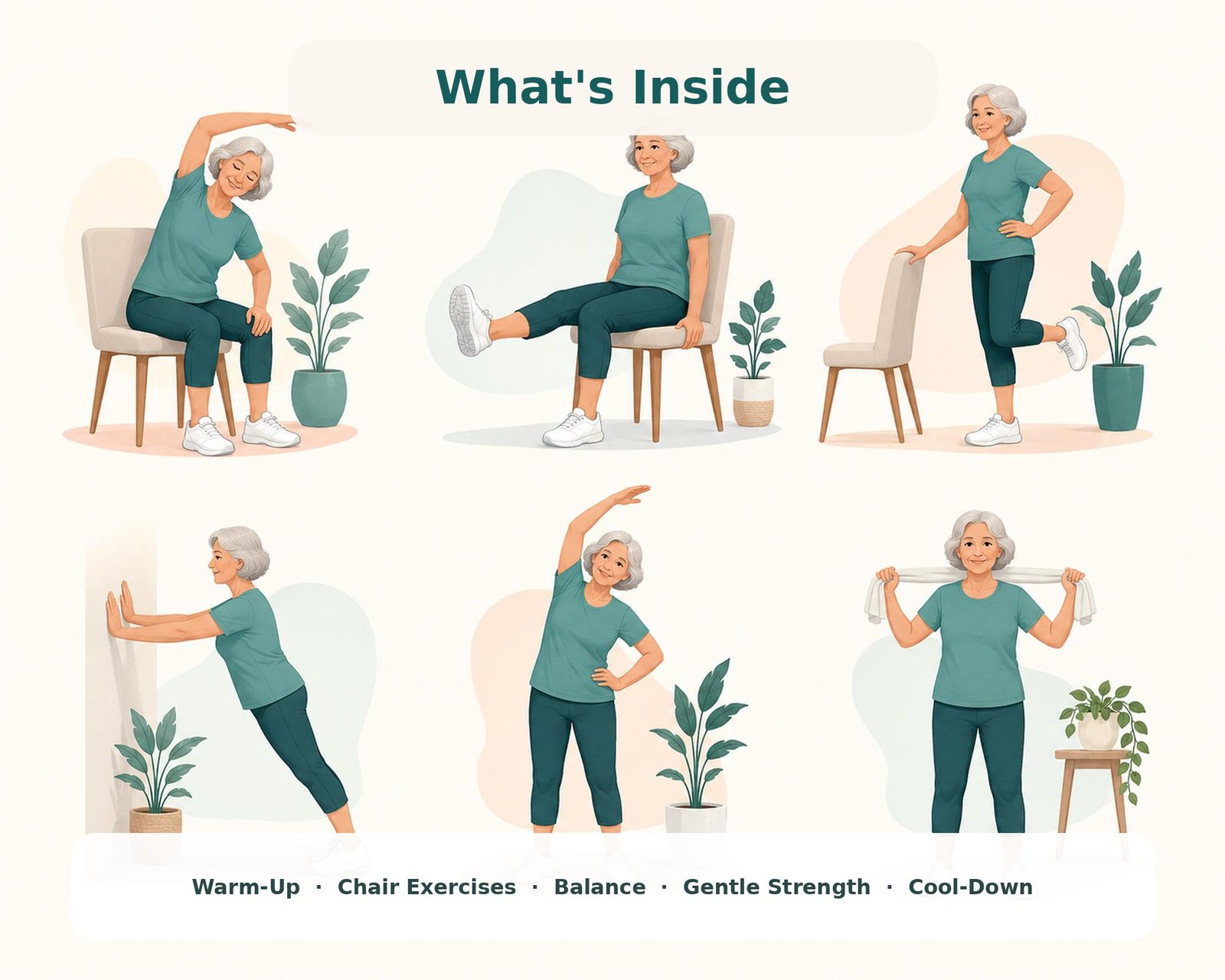
- Seated marching. Lift one knee a few centimetres, lower it, then the other. Swing your arms gently. 30 to 60 seconds.
- Shoulder rolls. Lift your shoulders toward your ears, roll them back and down. 8 times back, then 8 forward.
- Gentle neck turns. Turn your head slowly to look over one shoulder, back to centre, then the other side. 5 each way. Avoid full neck circles.
- Ankle circles and pumps. Lift one foot slightly, circle the ankle, then point and flex the toes. 10 each foot.
- Seated side bend. Rest one hand on the seat, reach the other arm overhead and lean gently to the side. Hold 10 seconds, 3 to 5 each side.
Strength (moves 6 to 11)
- Seated leg extension. Straighten one knee until the leg is level with the seat, pause for two seconds, lower slowly. 8 to 10 each leg.
- Seated knee lift. Hold the sides of the seat, lift one bent knee toward your chest, lower with control. 8 to 10 each leg.
- Sit-to-stand. Feet slightly behind your knees, lean forward and stand up, using your hands on your thighs or the chair if needed. Sit back down slowly. 5 to 10 times.
- Seated overhead press. Start with hands at shoulder height and press up toward the ceiling, then lower. Hold small water bottles when it gets easy. 8 to 10 times.
- Seated biceps curl. Arms by your sides, palms forward, bend the elbows to bring your hands toward your shoulders. 10 times.
- Tummy brace. Sit tall, gently draw your belly button in and breathe normally for 5 seconds, then relax. 5 times.
Balance and stretch (moves 12 to 15)
- Supported side leg lift. Stand behind the chair holding the backrest. Lift one leg out to the side a little way, keep your body upright, lower. 8 each side.
- Supported heel raise. Still holding the chair, rise onto the balls of your feet, pause, lower slowly. 10 times.
- Seated hamstring stretch. Sit near the front of the seat, straighten one leg with the heel on the floor and lean forward slightly from the hips. Hold 20 seconds each leg.
- Overhead towel stretch. Hold a small towel with both hands, lift it overhead, and lean very gently to each side. Hold 10 seconds each way, 3 times.
Moves 12 and 13 are done standing with both hands on a sturdy chair. If standing is not right for you yet, do seated heel raises (lift your heels while seated) instead.
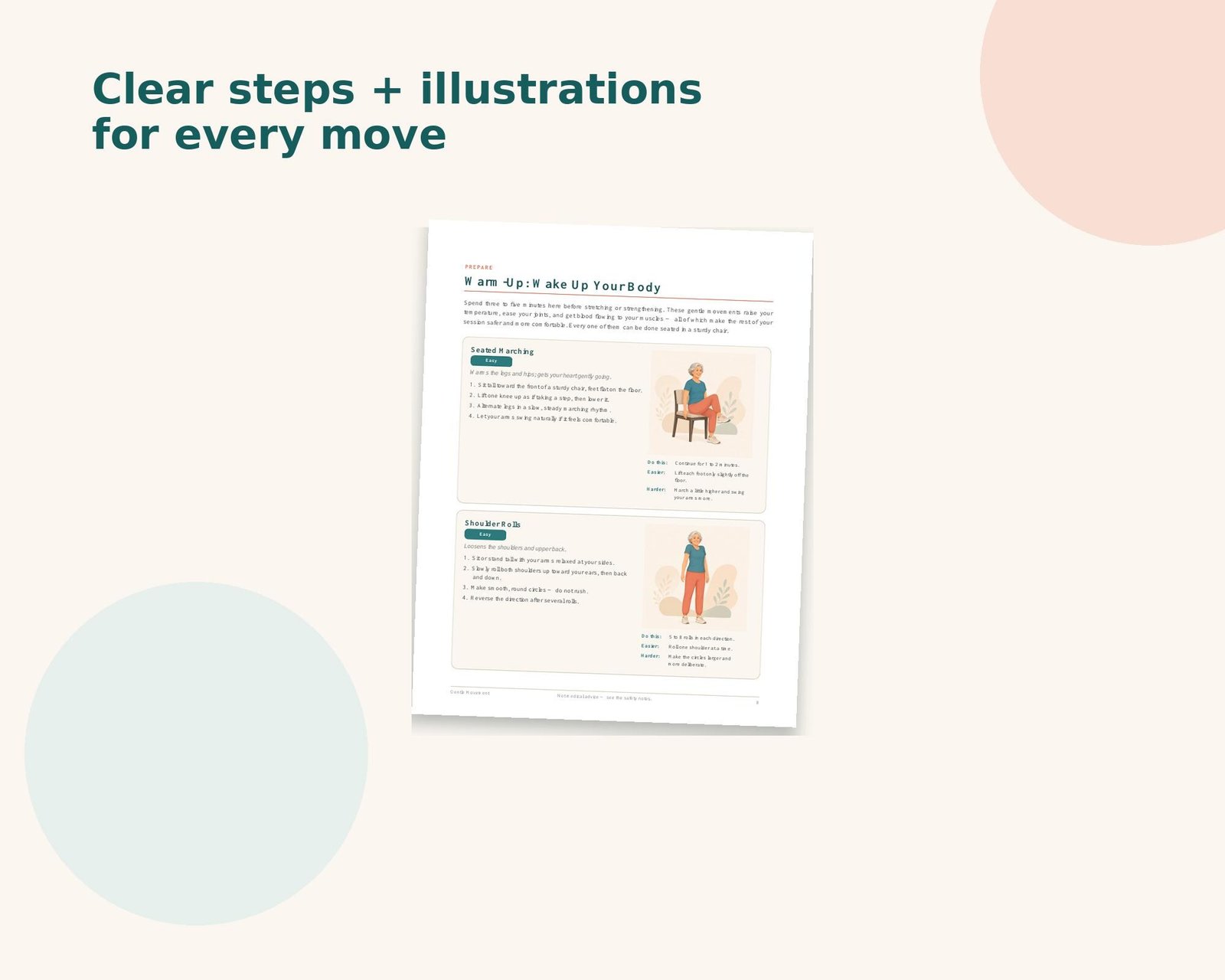
Chair Exercises for Seniors – Gentle Movement Guide. Every move in this article, illustrated step by step in one printable PDF you can keep beside your chair.
$1.79 (sale; regular $2.99) · Buy on Etsy · See the product page
How long and how often should seniors do chair exercises?
Aim for 15 to 20 minutes a session, three to five days a week. Do the strength moves on at least two non-consecutive days, as the CDC recommends for muscle strengthening, and practise balance on several days. On the other days, gentle mobility and stretching or a short walk keep you moving without overtiring.
| Day | Focus | Moves | Time |
|---|---|---|---|
| Monday | Warm-up + strength | 1–5, 6–11 | 20 min |
| Tuesday | Mobility + stretch | 1–5, 14–15 | 10–15 min |
| Wednesday | Warm-up + balance | 1–5, 12–13 | 15 min |
| Thursday | Warm-up + strength | 1–5, 6–11 | 20 min |
| Friday | Mobility + stretch | 1–5, 14–15 | 10–15 min |
| Saturday | Full routine | 1–15 | 20–25 min |
| Sunday | Rest or easy walk | – | – |
A sample 20-minute chair workout
Here is how a first full session might look for someone who is new to chair exercise. Treat the times as a guide, not a target, and finish early if you feel tired.
- Minutes 0–5: warm-up, moves 1 to 5.
- Minutes 5–12: strength, moves 6 to 11, one round of each with a short rest in between.
- Minutes 12–16: balance, moves 12 and 13 holding the chair (or seated heel raises).
- Minutes 16–20: cool down with moves 14 and 15 and three slow, deep breaths.
Each week, add one or two repetitions to the strength moves or a second round of your favourite move. Keep a simple note of what you did; seeing the weeks add up is a quiet motivator.
Can chair exercises help with balance and fall prevention?
They can help. Leg strength and balance practice are two things that make falls less likely, and chair exercises let you train both with support. Supported heel raises, side leg lifts and sit-to-stands are especially useful. If you have already had a fall or feel unsteady, ask your doctor about a falls assessment.
The NHS explains common causes of falls and what can help on its falls page, and the National Institute on Aging has practical guidance on strength and balance exercise for older adults. For a slow, standing balance practice to try next, see our guide to tai chi for seniors.
Which exercises should seniors avoid or change?
Avoid fast, jerky movements, full neck circles, deep twists under strain, and anything that causes sharp pain. Do not hold your breath while lifting. If you have had a recent operation, a joint replacement, osteoporosis or a heart condition, ask your doctor or physiotherapist which moves to skip or adapt before starting.
- Swap standing moves for seated versions on days you feel less steady.
- Shorten the range of movement rather than pushing through discomfort.
- Stop and rest if you feel dizzy, faint, breathless or have chest pain, and seek medical help if it does not settle.
If you want to keep an eye on effort during walks or longer sessions, our free heart rate zone calculator gives a rough guide. Women who want a decade-by-decade plan can also read strength and mobility exercises for women 30 to 70, and more guides live in the Health & Wellness hub.
Frequently asked questions
Can chair exercises help seniors lose weight?
Chair exercises burn fewer calories than brisk walking or swimming, so on their own they are not a weight-loss plan. They do build strength and make daily movement easier, which helps you stay active for longer. Pair them with walking where possible and with eating habits your doctor recommends.
How many chair exercises should a beginner do?
Start with five or six moves: two warm-up moves, two strength moves and one or two stretches. Do each for 5 to 8 repetitions or 20 to 30 seconds. Once that feels comfortable for a week or two, add another move or a few more repetitions rather than more speed.
Can I do chair exercises every day?
Gentle mobility moves and stretches are fine on most days. For strength moves such as sit-to-stands and arm presses, many people do better with a rest day in between, especially at first. If your muscles still feel sore the next morning, swap that day for an easy walk or stretching.
What kind of chair is best for chair exercises?
Choose a solid dining-style chair with four legs, a firm flat seat and no wheels. Armless chairs give your arms room to move. Put it against a wall or on a rug that will not slide, and check that your feet rest flat on the floor with knees at roughly a right angle.
Are chair exercises good for people with arthritis?
Many people with arthritis find gentle seated movement helps them feel less stiff, because the chair takes weight off the hips and knees. Move within a comfortable range, warm up first and avoid pushing through sharp pain. Ask your doctor or physiotherapist which moves suit your joints before you begin.
Can a caregiver lead chair exercises for an older relative?
Yes. Sit facing the person, demonstrate each move slowly and count out loud. Keep the session short, offer water, and watch for signs of tiredness, breathlessness or dizziness. Stay within arm’s reach during any standing move, and ask the person’s doctor which exercises are right for them.
Get the printable guide
Chair Exercises for Seniors – Gentle Movement Guide. Every move in this article, illustrated step by step in one printable PDF you can keep beside your chair.
$1.79 (sale; regular $2.99) · Buy on Etsy · See the product page
This guide is for general information and is not medical advice; talk to your doctor before starting a new exercise or health routine.
Written by Dr. Mueed Akhtar, PhD (Chemical Engineering), founder of HawkInc.