

Quick answer: Gentle yoga for anxiety means slow poses, longer exhales and short daily sessions you can actually keep up. For beginners, start with about seven minutes a day of four to five floor-based poses and one breathing exercise, build to 15 minutes over four weeks, and keep a three-minute version for hard days.
By Dr. Mueed Akhtar, PhD (Chemical Engineering), founder of HawkInc
This guide is for general information and is not medical advice; talk to your doctor before starting a new exercise or health routine. Yoga is not a replacement for treatment for an anxiety disorder, and you should not stop or change any prescribed medication or therapy.
Key takeaways
- 7 to 15 minutes on most days is a realistic beginner target.
- Make the exhale longer than the inhale; you can do this anywhere.
- Choose grounded, low-effort poses (Child’s Pose, Cat-Cow, Legs-Up-the-Wall) over fast flows or hot yoga.
- Track practice and mood together to see what actually helps.
- Yoga can sit alongside professional care, not replace it. If anxiety is affecting work, sleep or relationships, speak to a doctor.
Does yoga actually help with anxiety?
Research suggests yoga can ease everyday stress and anxiety symptoms for many people, though it is not a cure. The US National Center for Complementary and Integrative Health summarises reviews that found benefits for perceived stress and anxiety symptoms, while noting that results for diagnosed anxiety disorders are promising but not yet conclusive.
In one NCCIH-supported trial, Kundalini yoga improved generalised anxiety symptoms, but cognitive behavioural therapy did better. So treat a home practice as support for your mental health care, not a substitute. You can read the summary on the NCCIH yoga fact page.
What type of yoga is best for anxiety?
For anxiety, slower styles usually suit beginners best: gentle hatha, restorative and yin-style practices with long holds, floor-based poses and plenty of breath work. Fast vinyasa flows, hot yoga and forceful breathing techniques can feel overwhelming at first, and NCCIH advises beginners to avoid extreme poses and forceful breathing.
| Style | What it feels like | Good for | Go easy if |
|---|---|---|---|
| Gentle hatha | Slow poses, short holds, simple cues | Learning the basics; daily practice | You need very low effort that day |
| Restorative | Fully supported poses, long rests, props | Evenings, tired or wired days | You get restless lying still for long |
| Yin-style | Floor poses held 1 to 3 minutes | Winding down, noticing the body | You have joint pain or hypermobility |
| Vinyasa / power | Continuous movement, faster pace | Burning off restless energy later on | You are new, injured or easily dizzy |
Which gentle yoga poses calm anxiety?
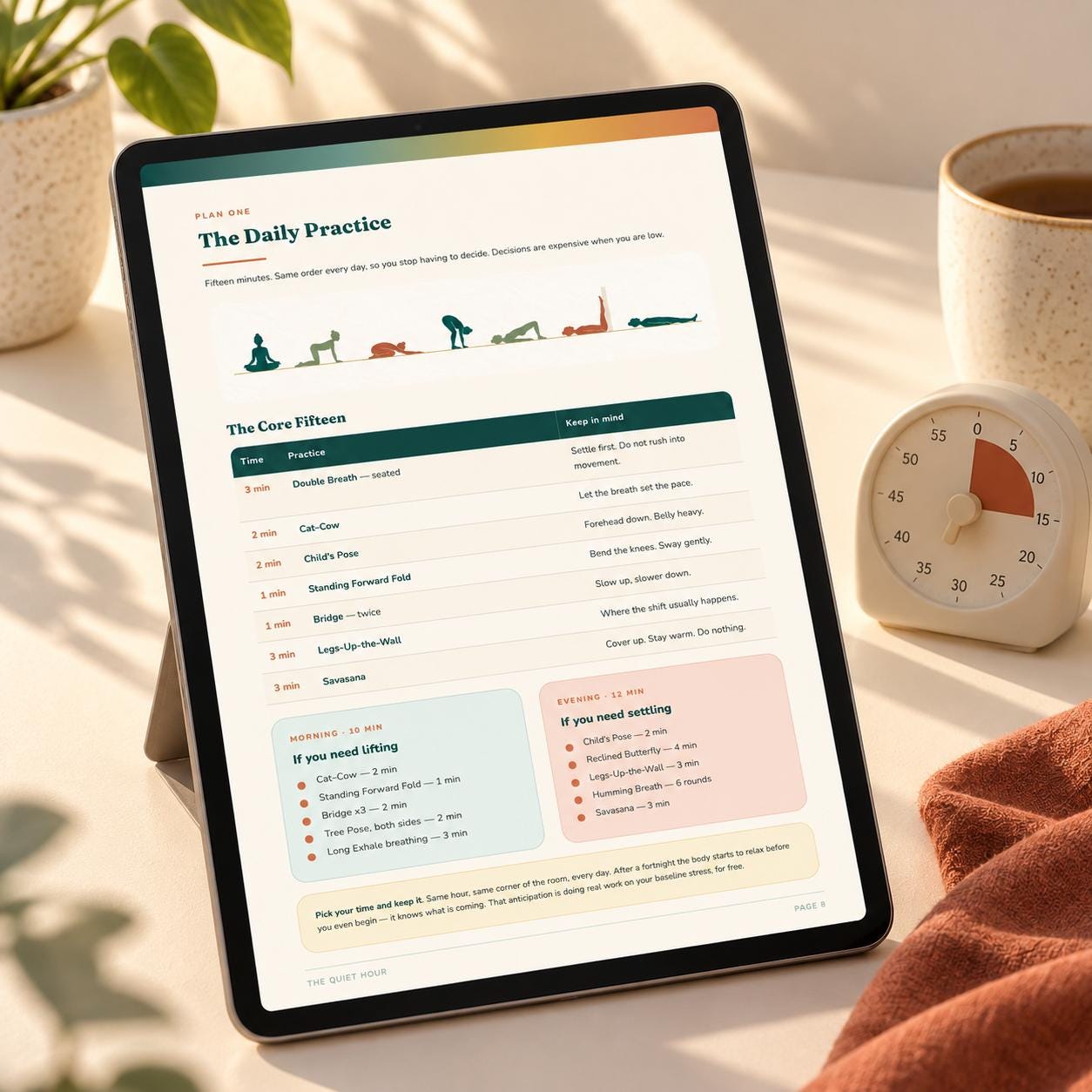
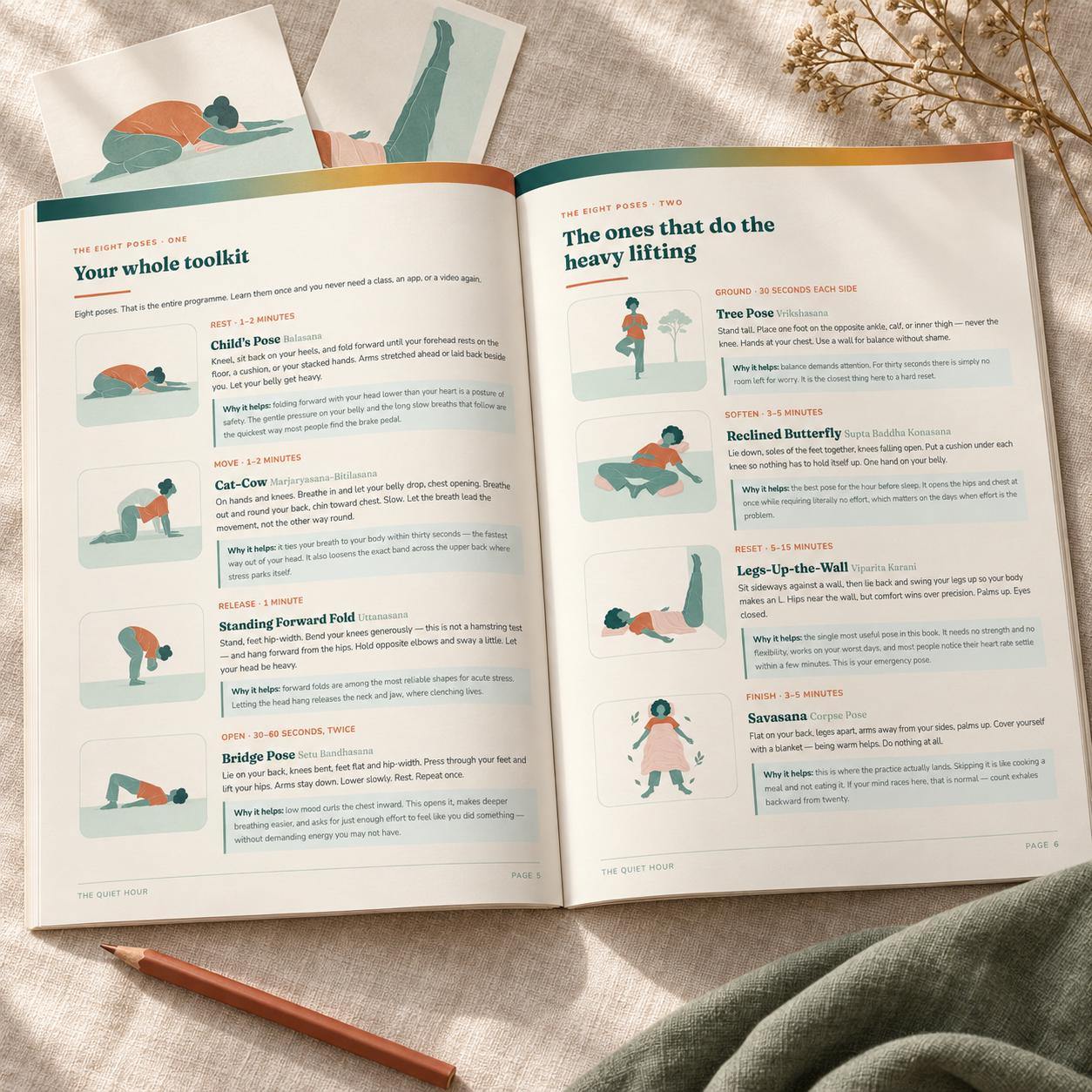
The most useful poses for anxious beginners are low to the ground, easy to get in and out of, and comfortable to breathe in. These eight cover a full gentle session: Child’s Pose, Cat-Cow, Standing Forward Fold, Bridge, Tree, Reclined Butterfly, Legs-Up-the-Wall and Savasana. You do not need all eight every day.
- Child’s Pose (1 to 2 minutes). Knees wide, forehead on a cushion.
- Cat-Cow (6 to 8 slow rounds). Round the spine on the out-breath, gently arch on the in-breath.
- Standing Forward Fold (5 breaths). Soft knees; roll up slowly to avoid dizziness.
- Bridge Pose (3 rounds of 3 breaths). Lift the hips a little, lower on an exhale.
- Tree Pose (3 to 5 breaths each side). Use a wall or chair; foot on ankle or calf, never the knee.
- Reclined Butterfly (1 to 3 minutes). Soles together, cushions under the thighs.
- Legs-Up-the-Wall (3 to 5 minutes). Lower your legs if they tingle.
- Savasana (2 to 5 minutes). If stillness feels uncomfortable, keep your eyes open.
Stop if anything causes pain or dizziness. If you are pregnant, older, or have joint, back, eye or blood-pressure problems, check with a health professional first.
How do you breathe during yoga for anxiety?
Breathe in through the nose and make the out-breath slower and longer than the in-breath, without forcing either. The NHS recommends a simple version: breathe into your belly, in through the nose and out through the mouth, counting to five if it helps, for at least five minutes, practised regularly.
Three beginner-friendly options:
- Long-exhale breathing: in for a count of 4, out for a count of 6. Start with ten rounds.
- Cyclic sighing (double breath): a full inhale through the nose, a short second top-up inhale, then a long, slow exhale through the mouth.
- Humming breath: breathe in, then hum gently on the out-breath. The sound gives an anxious mind something simple to follow.
In a small 2023 Stanford study, five minutes a day of cyclic sighing for 28 days lifted mood more than mindfulness meditation, and both reduced state anxiety. The authors call it exploratory (study on PubMed Central; NHS breathing exercise for stress).
Gentle yoga for anxiety: a 30-day plan for beginners
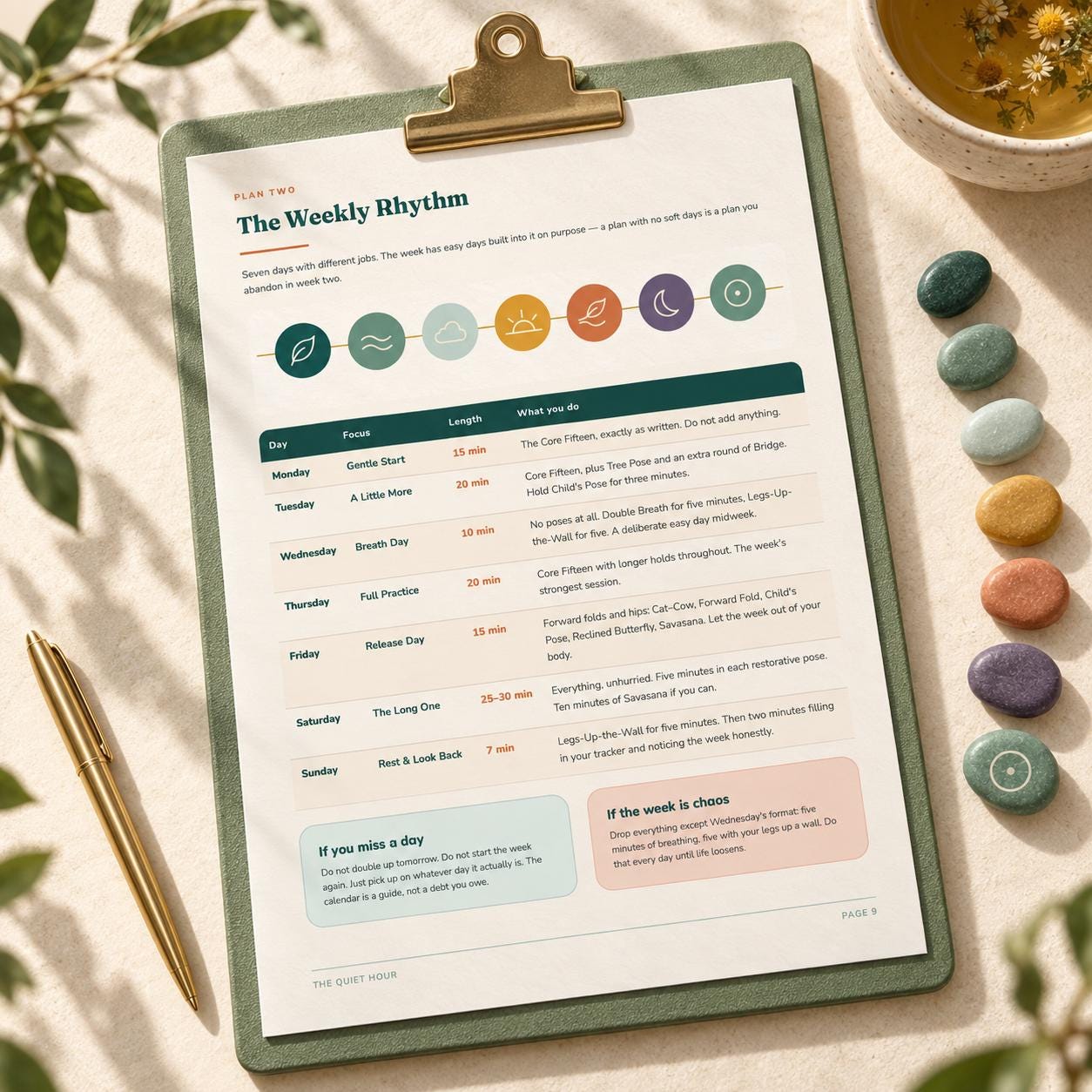
A good beginner plan starts very small, adds a minute or two each week and always has an easier fallback. Here is a sample four-week progression, based on the structure we use in our printable plan. Practise five or six days a week and treat the rest days as genuine rest.
| Week | Daily session | What to do |
|---|---|---|
| Week 1 | About 7 minutes | Child’s Pose, Cat-Cow, Reclined Butterfly, Savasana + 10 long-exhale breaths |
| Week 2 | About 10 minutes | Add Bridge Pose and Legs-Up-the-Wall; try cyclic sighing |
| Week 3 | About 12 minutes | Add Standing Forward Fold and Tree Pose (with support) |
| Week 4 | About 15 minutes | All eight poses in order; finish with humming breath |
The three-minute routine for hard days:
- Sit or lie down and do five long-exhale breaths (about 1 minute).
- Move into Child’s Pose or lie with your legs up a wall (about 1 minute).
- Finish with three cyclic sighs and notice one thing you can hear, see and feel (about 1 minute).
Worked example: using the mood tracker
Here is how a week of tracking might look for someone fitting yoga around work. Rate mood before and after on a simple 1 to 5 scale.
| Day | Session | Mood before | Mood after | Note |
|---|---|---|---|---|
| Mon | 7 min, evening | 2 | 3 | Shoulders less tight |
| Tue | 3-min routine | 2 | 2 | Long day; still counts |
| Wed | 7 min, morning | 3 | 4 | Breathing helped before meeting |
| Fri | 7 min, evening | 2 | 3 | Legs-Up-the-Wall felt best |
| Sat | 7 min, morning | 3 | 4 | Slept better last night |
Look for patterns, not perfect scores. Here, evening sessions eased tension and morning sessions helped before stressful events.
Want this laid out for you? Our printable 30-day gentle yoga plan has every pose illustrated, plus the tracker. USD 3.59 on Etsy. Buy on Etsy | Product page
How long does it take for yoga to help anxiety?
Many people notice they feel calmer straight after a session, but steadier changes usually take a few weeks of regular practice. Studies on yoga and breathing commonly run for four to twelve weeks. Give a gentle routine at least a month, track how you feel, and adjust rather than judging it after a few days.
Short sessions on most days are easier to sustain than one long weekly class. The CDC’s adult activity guidelines also recommend muscle-strengthening activity twice a week, so gentle yoga can sit alongside walking or other exercise rather than replacing it (CDC physical activity guidelines).
When should you get help instead of relying on yoga?
Speak to a doctor or mental health professional if anxiety does not ease, keeps coming back, is felt in many situations, or is affecting your work, sleep or relationships. The US National Institute of Mental Health describes anxiety disorders as anxiety that does not go away and can get worse over time, and effective treatments exist.
Gentle yoga can still be part of your week; tell your clinician what you are doing. If you are in crisis or thinking about harming yourself, contact emergency services or a crisis line in your country straight away. More information: NIMH on anxiety disorders.
Frequently asked questions
Is gentle yoga good for anxiety if I have never done yoga?
Yes, gentle yoga is designed with beginners in mind. Start with floor-based poses such as Child’s Pose, Cat-Cow and Legs-Up-the-Wall, keep sessions to about seven minutes, and focus on a longer out-breath. You do not need flexibility, special clothing or equipment, only a quiet space and a mat, rug or folded blanket.
How many minutes of yoga a day helps anxiety?
There is no proven ideal dose, but short daily sessions are realistic and easy to repeat. Many beginner plans start at five to seven minutes and build to around fifteen. A five-minute daily breathing practice was used in a 2023 Stanford study, and the NHS suggests breathing exercises for at least five minutes, practised regularly.
What is the best time of day to do yoga for anxiety?
The best time is the one you will keep. Morning practice can set a calmer tone before work or a stressful event, while an evening session helps many people unwind before bed. Try both for a week, note your mood before and after, and keep whichever time gives you the bigger change.
Can yoga make anxiety worse?
Occasionally. Lying still, closing your eyes or focusing hard on breathing can make some people more anxious at first. Keep your eyes open, shorten holds, choose gentle movement over stillness and avoid forceful breathing. If a technique consistently makes you feel worse, stop it and talk to a health professional for guidance.
Do I need a teacher, or can I learn at home?
You can begin at home with a clear, beginner-level plan, but a qualified teacher is helpful, especially if you are older, pregnant or managing an injury. NCCIH notes that learning without supervision is linked to higher injury risk, so go slowly, skip anything painful and consider a few in-person classes.
Is yoga a replacement for anxiety medication or therapy?
No. Yoga can be a helpful addition to self-care, but it is not a treatment for an anxiety disorder and should not replace medication or therapy prescribed by your doctor. Never stop or change medication because of a yoga plan. Talk to your clinician about how a gentle routine could fit with your care.
Get the full printable plan
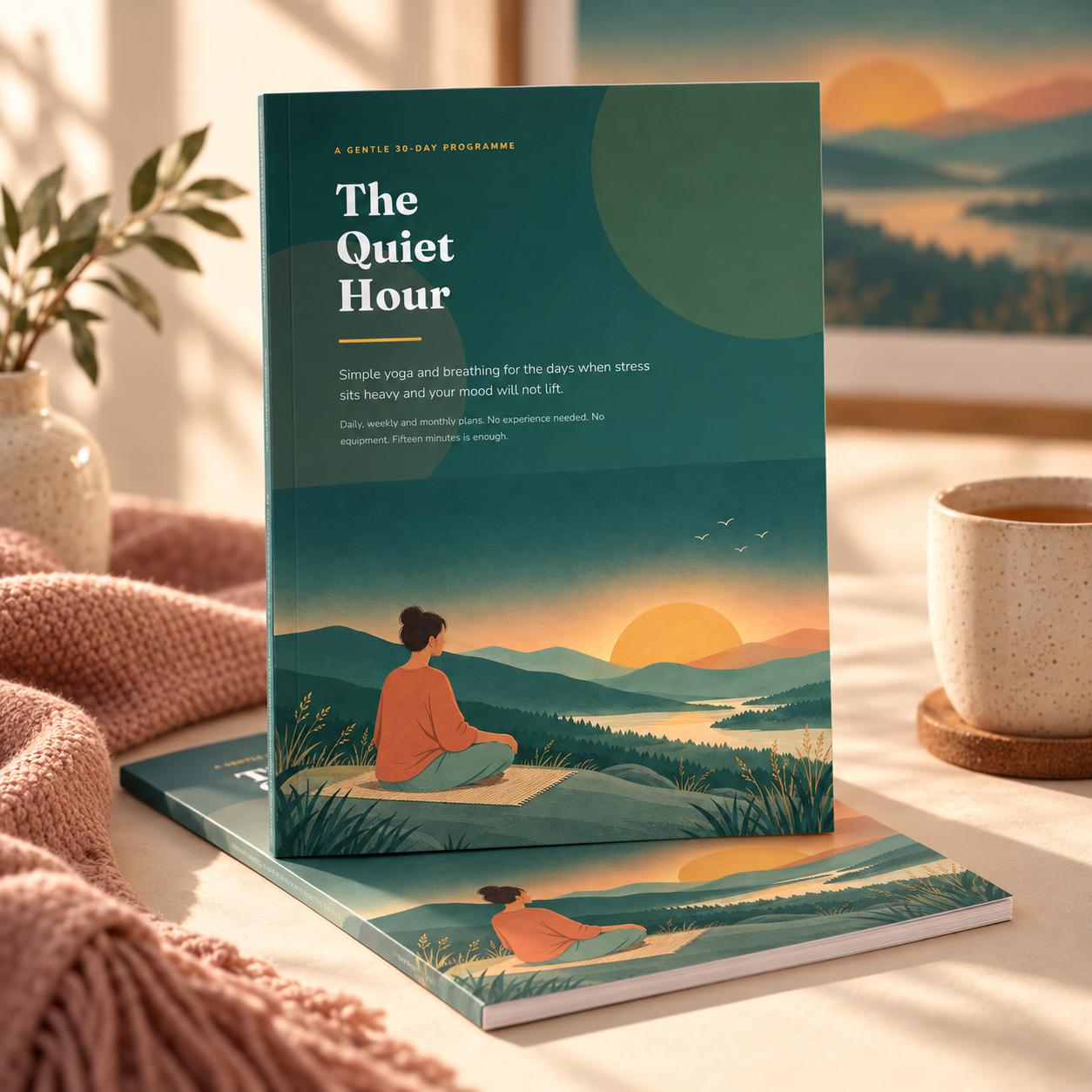
The Quiet Hour: 30 Day Gentle Yoga Plan gives you eight illustrated poses, three breathing techniques, a four-week progression and a 30-day practice and mood tracker in one 14-page printable PDF. Price: USD 3.59 USD 5.99 on Etsy.