
Quick answer: A simple self-care routine for women combines three things each week: strength training on 2 to 3 days to protect muscle and bone, gentle movement such as walking, yoga or lymphatic self-massage on the days in between, and a few minutes of slow breathing every day to calm the nervous system. Keep each session short, track it on paper, and build up over 12 weeks rather than all at once.
By Dr. Mueed Akhtar, PhD (Chemical Engineering), founder of HawkInc
Last updated: October 16, 2026
This article is general wellbeing information, not medical advice. Check with your doctor or physiotherapist before starting a new exercise or self-massage routine, especially if you are pregnant, going through IVF, or have osteoporosis, lymphoedema, a heart condition or a recent injury.
Key takeaways
- The World Health Organization recommends muscle-strengthening activity on at least 2 days a week for adults, and it matters even more after 40 as oestrogen falls.
- A “nervous system reset” is not a trend you need to buy into. Slow breathing with a longer exhale, humming and gentle stretching are simple, free ways to help your body shift into rest mode.
- Lymphatic self-massage is gentle and relaxing. The strongest evidence for it is in managing lymphoedema; for general wellbeing, treat it as a calming self-care habit rather than a detox.
- A weekly plan you can see on one page is easier to stick to than a list of good intentions.
- Short and consistent beats long and occasional: 20 to 30 minutes, most days, for 12 weeks.
What should a self-care routine for women include?
Self-care has become a social media word for bath bombs and face masks. A routine that changes how you feel over months is more practical. It covers four areas:
| Area | Why it matters | Simple way to do it |
|---|---|---|
| Strength | Protects muscle and bone, supports balance and metabolism | 2 to 3 home strength sessions a week |
| Mobility and aches | Keeps the back, neck, knees and hips moving comfortably | 10 minutes of targeted exercises for your problem areas |
| Calm | Helps the body recover from stress and sleep better | 3 to 10 minutes of slow breathing, yoga or a vagus nerve reset |
| Tracking | Shows progress and keeps you consistent | A weekly tracker on paper or in a PDF app |
Why is strength training important during menopause?
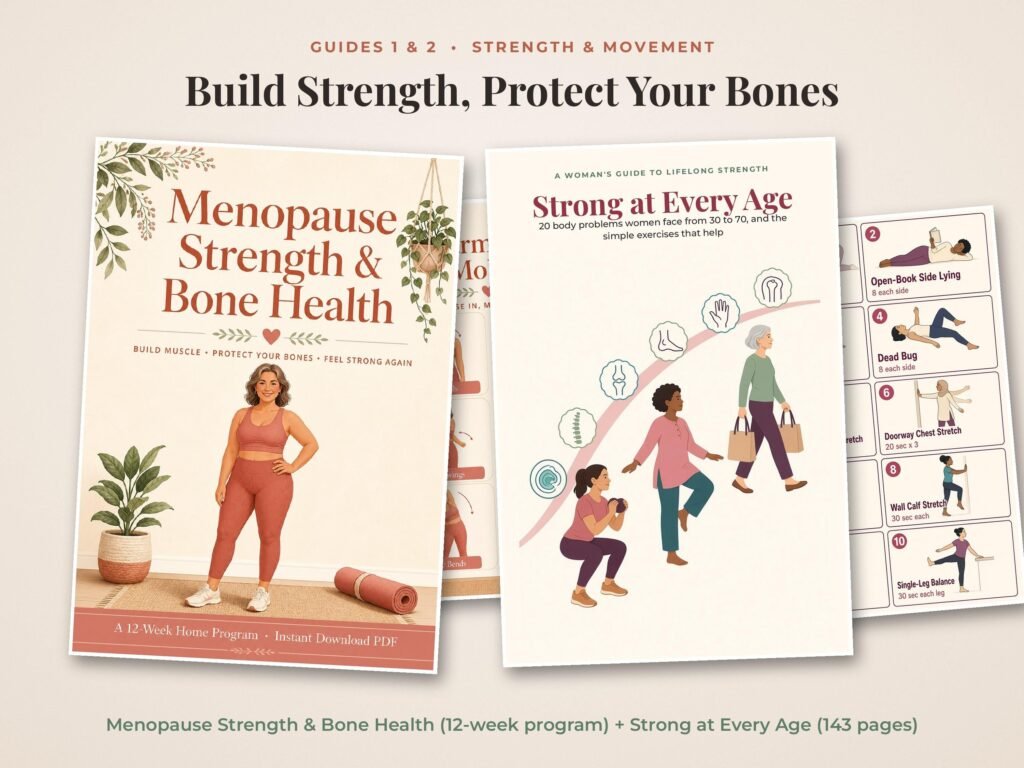
As oestrogen falls in perimenopause and menopause, women lose bone density and muscle faster. Regular strength and impact training is one of the best-supported ways to slow that loss. The WHO physical activity guidelines recommend at least 150 minutes of moderate activity a week plus muscle-strengthening on 2 or more days. The NHS also lists regular exercise among the things that help with menopause symptoms.
A good menopause workout plan starts with bodyweight moves (sit-to-stands, wall push-ups, glute bridges, step-ups) and progresses to light dumbbells or bands. It also includes pelvic floor and core work, and balance practice to lower the risk of falls. For a full plan, see our menopause workout plan for women over 40.
What is a vagus nerve reset?
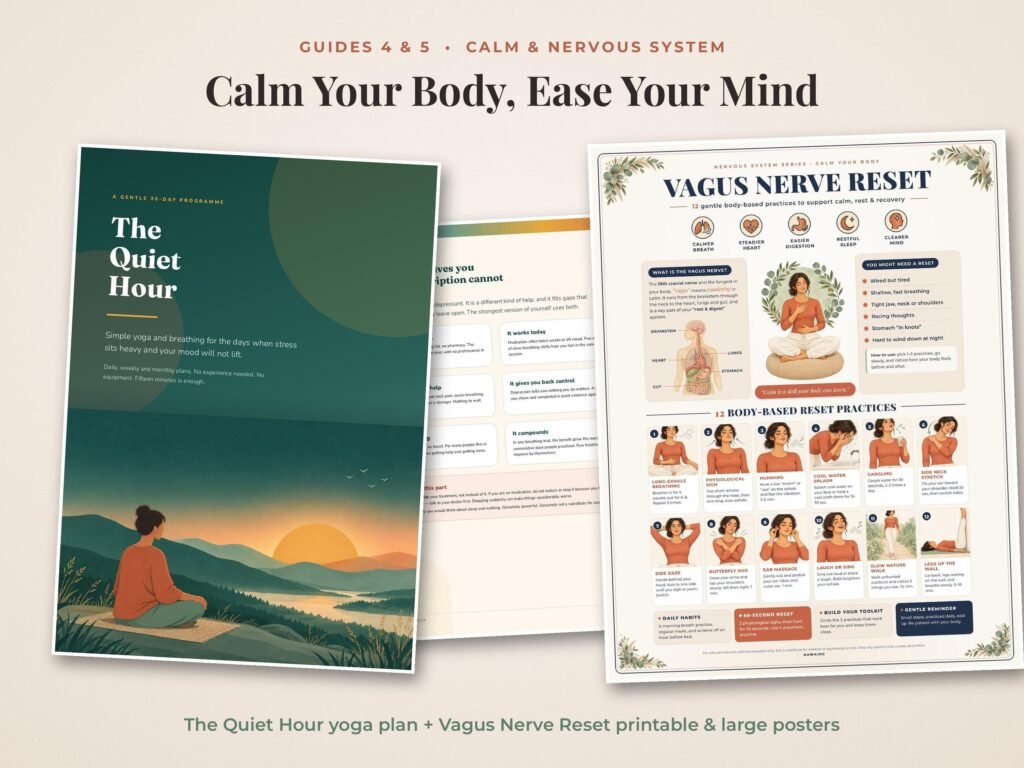
The vagus nerve is the main nerve of the parasympathetic, or “rest and digest”, system. A vagus nerve reset is a short set of gentle practices that encourage that system: slow breathing with a longer exhale than inhale, humming or singing, gentle neck and shoulder stretches, splashing the face with cool water, and lying with your legs up a wall. Research on slow breathing shows it can increase heart rate variability, a marker of the body’s ability to relax, although many of the claims made online go further than the evidence.
The easiest version takes 3 minutes: breathe in through your nose for 4 counts and out slowly for 6 to 8 counts, ten times. Do it before bed, after a stressful meeting, or whenever your shoulders are up around your ears.
Does lymphatic drainage massage work?
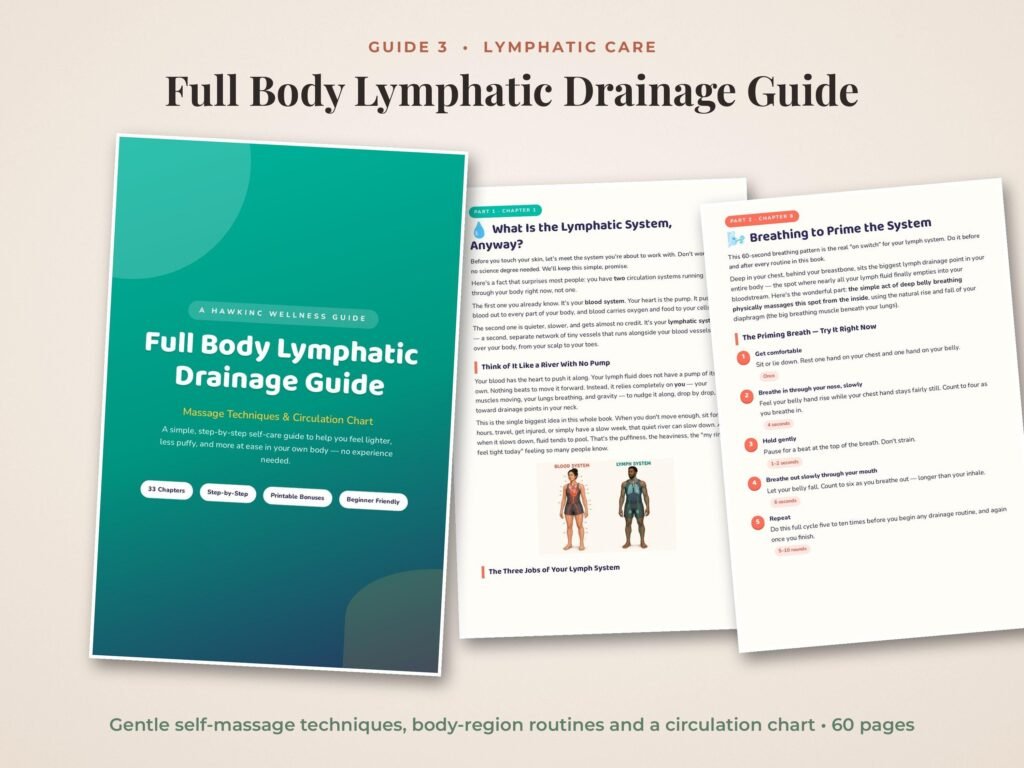
Manual lymphatic drainage is an established part of treatment for lymphoedema, done by trained therapists. At home, gentle lymphatic self-massage is relaxing and may ease a feeling of puffiness, but it is not a detox and it will not cause weight loss. Use very light pressure, work towards the collarbones and armpits, and stop if anything hurts. Our step-by-step guide to lymphatic drainage massage at home covers the full routine.
A weekly self-care plan you can follow
This is a sample week built from the guides in the bundle. Pick a start day, do what you can, and tick it off.
| Day | Main session (20–30 min) | Daily calm (3–10 min) |
|---|---|---|
| Monday | Strength: lower body and bone-loading moves | Vagus nerve breathing before bed |
| Tuesday | Walk + lymphatic self-massage | Legs up the wall |
| Wednesday | Strength: upper body, core and pelvic floor | Humming or slow breathing |
| Thursday | The Quiet Hour gentle yoga | 3-minute “hard day” version if needed |
| Friday | Strength: full body | Vagus nerve breathing |
| Saturday | Walk + balance practice + your problem-area exercises | Stretch and breathe |
| Sunday | Rest, plan next week, fill in your tracker | Quiet Hour breathing |
After 4 weeks, add a few reps or a heavier weight. After 12 weeks, look back at your tracker. Most women notice they feel stronger and sleep better long before they see changes in the mirror.
What about women going through IVF?
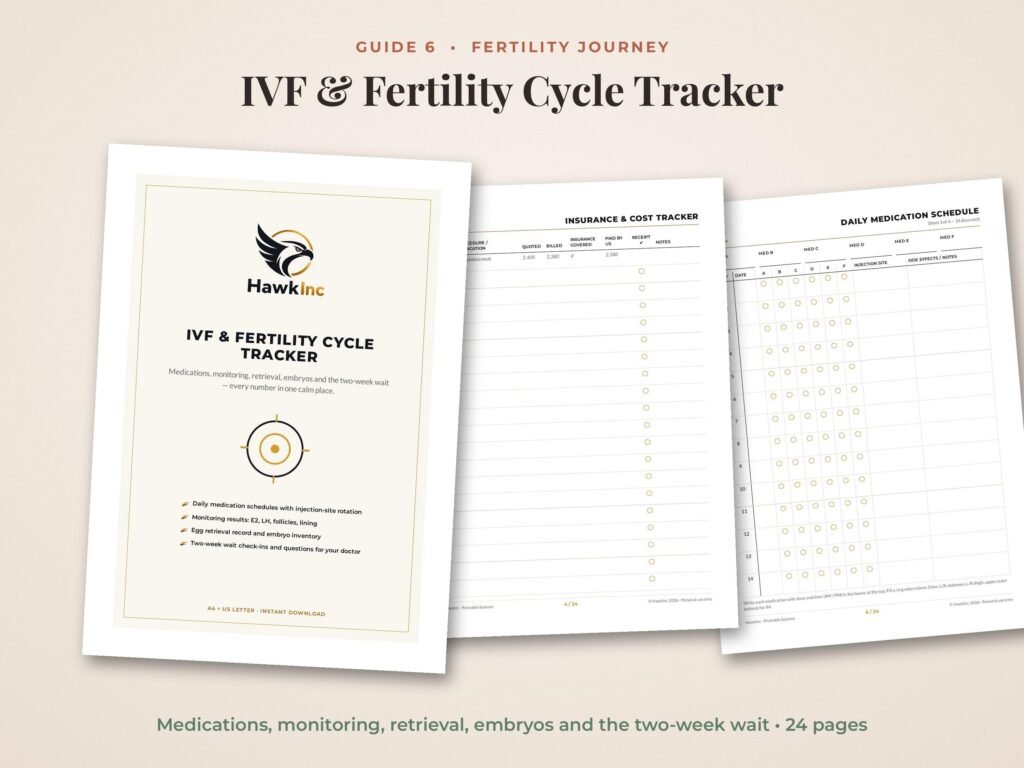
IVF adds a demanding schedule of injections, scans and blood tests. A tracker for medication times, injection-site rotation and monitoring results reduces mistakes and mental load. Gentle movement and breathing practices can help with stress, but follow your clinic’s advice about exercise during stimulation and after transfer. See our guide on how to organise an IVF cycle.
Get the Women’s Wellness Bundle
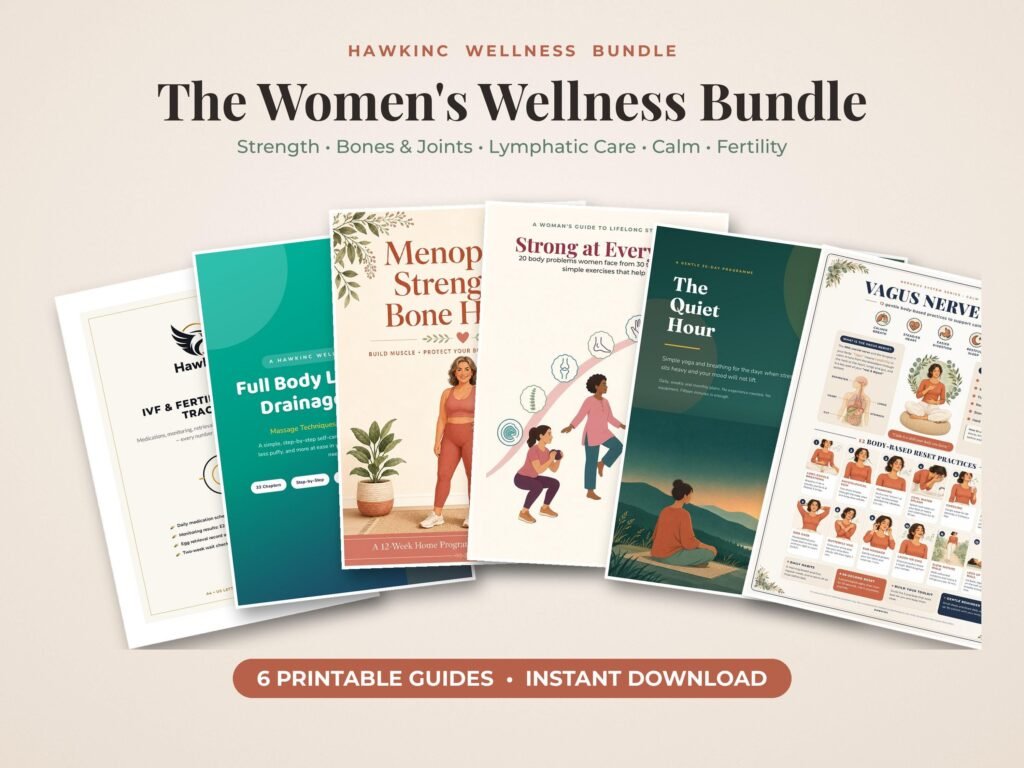
The bundle contains all six guides used in this routine: Menopause Strength & Bone Health, Strong at Every Age, the Full Body Lymphatic Drainage Guide, The Quiet Hour, Vagus Nerve Reset and the IVF & Fertility Cycle Tracker. Print it or use it in GoodNotes on your iPad. See everything inside the bundle.
Frequently asked questions
What is a good daily self-care routine for women?
A short daily routine might be 20 to 30 minutes of movement (strength training 2 to 3 days a week, walking or yoga on the others) plus 3 to 10 minutes of slow breathing or stretching to wind down. Consistency matters more than length.
How do I reset my nervous system?
Slow breathing with a longer exhale, humming, gentle stretching, cool water on the face and lying with your legs up the wall all encourage the body’s rest-and-digest response. Three minutes of 4-in, 6-to-8-out breathing is an easy start.
What exercises are best during menopause?
Strength training on 2 or more days a week, weight-bearing activity such as brisk walking, balance practice and pelvic floor exercises. Start with bodyweight moves and progress slowly.
Is lymphatic drainage massage safe to do at home?
For most people, gentle self-massage is safe. Avoid it and speak to your doctor first if you have an active infection, a blood clot, heart failure, kidney problems or untreated cancer.
How long before a self-care routine makes a difference?
Many people notice better sleep and less stress within 2 to 4 weeks. Strength and bone benefits take months, which is why a 12-week plan is a good first goal.
Is the Women’s Wellness Bundle medical advice?
No. It is general education and wellbeing information. Always follow advice from your own doctor, physiotherapist or fertility clinic.